
- Digital Marketing
- Published 01/02/2026
The Marketing-Led Growth System: How to Build a Marketing Engine That Actually Works
Summarize this post
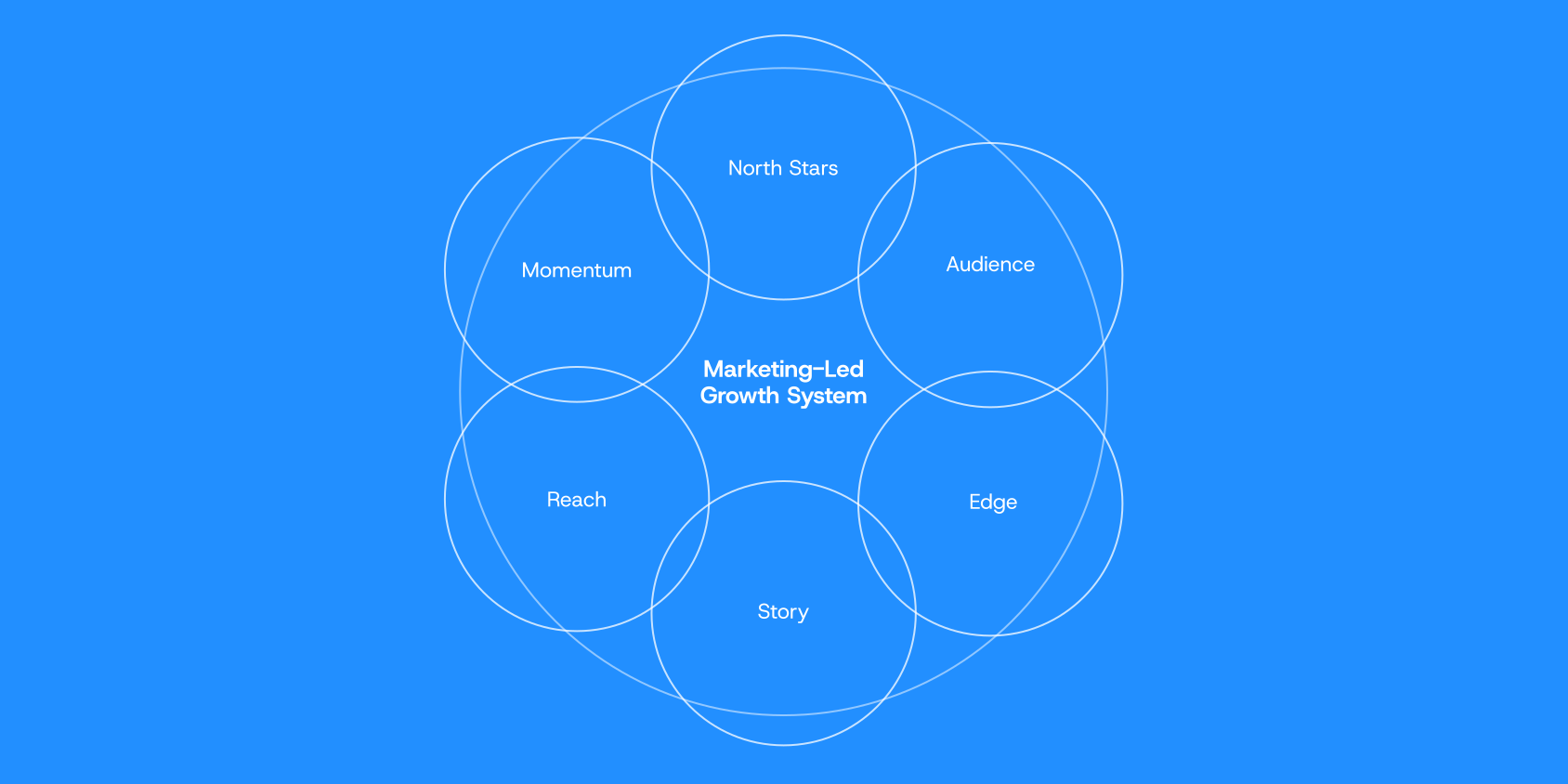
Marketing without a solid foundation is like pouring water into a leaky bucket. Even the best messaging fails if it reaches the wrong people. And even if it reaches the right people, they won’t act if the message doesn’t resonate.
Over my 20 years of experience, the most common issue I see preventing B2B companies from growing is treating marketing as a collection of disconnected tactics.
They run ads without clear positioning.
They create content without understanding their audience.
They chase channels because competitors are there, not because their buyers are.
This results in wasted budgets, knee-jerk reactions about “what works and what doesn’t,” and ultimately, missed sales and marketing targets.
We created the Marketing-Led Growth (MLG) System to fix this common challenge.
What the MLG System is
Marketing is an interconnected system. If you’re weak in any of the six foundations, your campaigns will underperform. Most companies are strong in one or two areas and weak in the rest.
The MLG System is a repeatable framework designed to:
- Identify the weakest parts of your marketing foundation
- Sequence the work so you’re fixing the right things in the right order
- Balance quick wins with long-term structural improvements
- Build momentum through focused sprints
The approach is lean. You do the minimal effective work to get measurable impact, then test and iterate from there. No 100-page strategy decks. No perfecting guesses. You fix what’s broken, measure what happens, and adjust.
The MLG System isn’t built on new ideas. It’s grounded in proven concepts from over 15 classic marketing books like Positioning, Obviously Awesome, StoryBrand, Traction, Buyer Personas, Competing Against Luck, and Ogilvy on Advertising. We just organized them into a structure you can actually use.
Companies that use the system see improved results from their marketing efforts and continued growth through ongoing optimization.
Let’s dive into the six fundamentals of any marketing system.
The six fundamentals
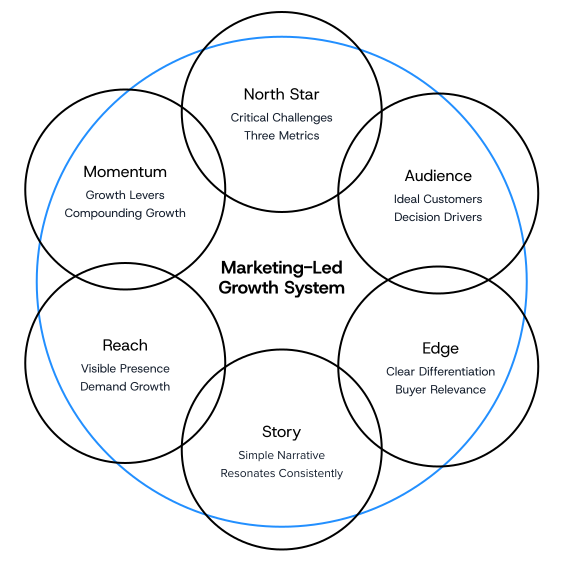
North Star Metrics
The one to three metrics that best measure your desired marketing outcomes. These need to be relevant, achievable, and laser-focused on measuring where you want to go. Fewer is better.
Most B2B companies want to grow revenue. That’s the real goal. But marketing doesn’t work that fast. The work you do today might not show up in the sales pipeline for months.
If you set “increase pipeline by 20%” as your metric in month one, you’ll kill good work before it has time to pay off. You’ll think marketing isn’t working when you just didn’t wait long enough.
North Star Metrics change as you make progress.
Annual North Star: The big outcome you’re driving toward. Revenue. Pipeline. Market share.
Sprint North Star: Leading indicators that show you’re on the right track. Traffic to high-intent pages. Engagement on target accounts. Conversion rate improvements.
Early on, you focus on sprint metrics. They give you confidence that if you keep going, the annual metrics will follow. As those leading indicators improve, your North Star Metrics shift closer to revenue outcomes.
Audience
If you don’t understand your audience, you can’t reach them. You won’t know why they’d buy from you over a competitor. You won’t know how to talk to them in a way that connects.
Most businesses think they understand their audience. They’re usually wrong. They’re relying on intuition instead of research and data.
The MLG System includes a process to develop a deep understanding of your audience’s psychology and behavior. Then we document it on a single page (front and back) that you can share with your entire team so everyone’s working from the same understanding.
Brand Edge (Positioning)
Your brand edge is what makes you different from your competitors in a way that actually matters to your audience. Not what you think is unique. What they value.
This isn’t three or four loose differentiators rolled into one run-on sentence. It’s the one thing your competitors can’t touch that resonates with the right people you’re trying to reach.
Value Story (Messaging)
Once you have your brand edge, you need to know how to communicate it. Psychologically speaking, humans respond best to stories, so the MLG System helps you develop one around your brand. Your audience is the hero. You’re the guide in their journey.
From there, you build a simple yet flexible messaging strategy that reinforces your value without sounding repetitive. The strategy adapts to every channel and its specific nuances.
Reach (Promotion)
Where does your audience pay attention? How can you reach them when and where they want to be reached?
With infinite time and budget, you could test every channel. But most brands don’t have that luxury. Spreading effort thin across half a dozen channels means nothing gets optimized.
The MLG System prioritizes two to three channels that are either already working or have a high likelihood of success. The rest get sorted into “probably effective” and “long-shots.”
As you test and optimize the priority channels, you cycle in the probables, then eventually the long-shots. It’s a way to get quick impact without leaving results on the table. You just evaluate channels over time instead of all at once.
Momentum (Consistency)
Even with a strong foundation, on-point strategy, and great execution, you’ll fail if you don’t do enough marketing. Especially in B2B.
The average buyer needs over 10 touchpoints before they’re ready to buy. They’re spending more time researching on their own than talking to sales or scheduling demos. Less than 10% of your audience is ready to buy at any given moment.
If you’re not reaching your audience consistently over a long enough period, you won’t see results.
Once your foundation is set, you need to build momentum and keep it going. You do that through focused sprints where you execute against a specific goal or initiative. This process doesn’t stop. You test, learn, optimize, and improve, which leads to compounding growth over time.
Why foundations come before tactics
Here’s what happens when you skip the foundation work:
You launch a paid ad campaign. It drives traffic. But the messaging is generic, so visitors bounce. Even if they stay, they don’t understand why you’re different from three other options they’re comparing. Even if they get that, they don’t know what to do next because your site wasn’t built with a clear buyer journey in mind.
You spent money. You got clicks. Nothing happened.
Or maybe you’re tracking the wrong metrics. You think you’re being successful when you’re not. Or you’re doing great but the numbers say otherwise, so you kill what’s working.
Or you’re reaching people, but they’re the wrong people. You don’t understand your audience well enough to know where they are or what they care about.
Or you’re reaching the right people, but your positioning doesn’t matter to them. They see you. They just don’t care.
Or your positioning is spot-on, but you don’t know how to communicate it in a way they understand or that motivates them to act.
Or you’re not doing enough marketing. You’re spreading yourself too thin across too many channels, or you gave up too soon, or you’re not hitting your audience enough times for it to stick.
Or you’re not testing and improving. You assume you’ve hit the ceiling or that something doesn’t work when it just needed a different approach or more time.
These aren’t tactics problems. They’re foundation problems.
Tactics are the floor pedal. Foundations are the engine. If the engine is weak, pressing harder on the pedal just burns fuel.
The MLG System starts with foundations because they multiply the impact of everything else. Fix positioning and suddenly your content resonates. Clarify your audience and your ad spend gets more efficient. Nail your value story and sales conversations get shorter.
Sprints and Growth Levers
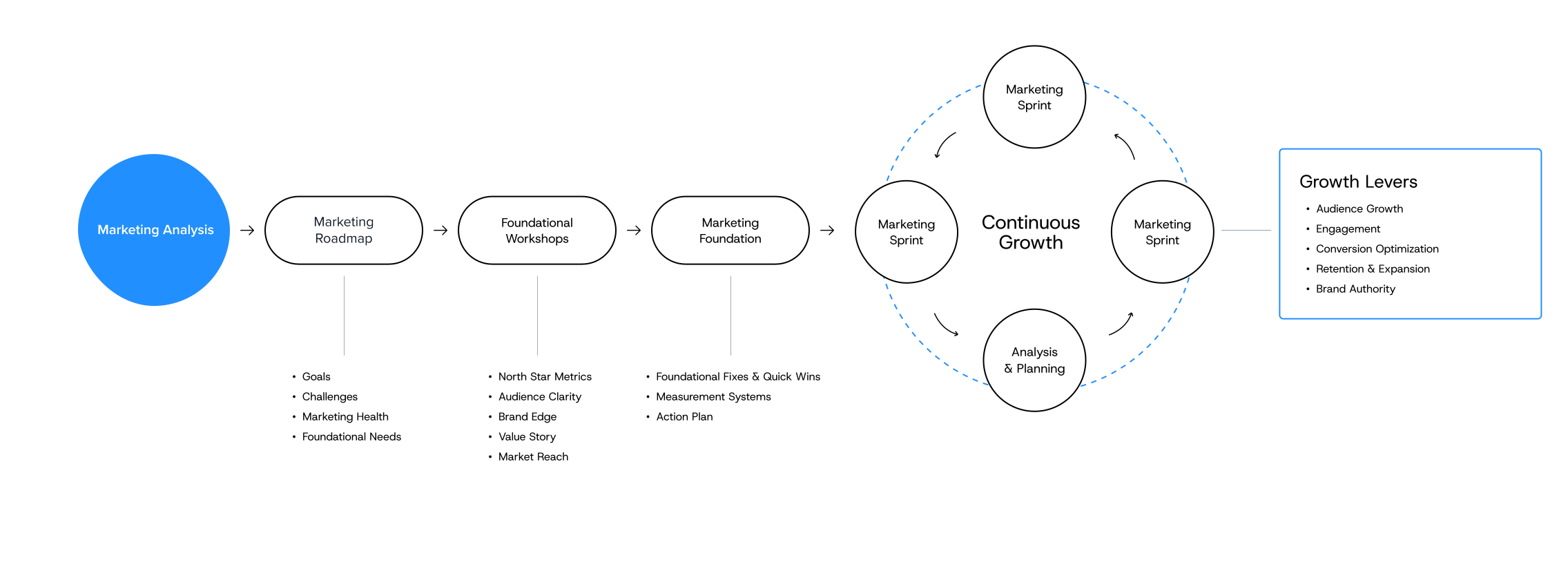
Once you’ve addressed your marketing foundation: North Star Metrics, Audience, Brand Edge, Value Story, you move into sprints focused on reach and momentum.
A sprint is roughly 100 hours of effort focused on a specific growth lever. Growth levers are aspects of improving and executing against an already solid foundation.
The growth levers are:
Audience Growth
Reach more of the right people by growing an existing channel or testing new ones. You might improve search visibility or start building an email list.
Engagement
Increase engagement on your existing channels. You’re reaching people, but are they clicking? Reading? Sharing? Commenting? Subscribing?
Conversion
Turn interest into leads. Improve calls to action. Create new conversion opportunities. Test landing pages, messaging, ads, and creative. This can also include sales enablement, CRM implementation, and lead nurturing.
Brand Authority
Build brand awareness, trust, and credibility. Examples include positioning-focused social and advertising campaigns, testimonial and review acquisition, public relations, and managing AI descriptions of your brand.
Retention and Expansion
Keep existing customers longer. Grow them into bigger accounts. Convert them into advocates who recommend you to others. This can focus on the post-purchase/onboarding experience, customer satisfaction surveys, upsell strategies, reengagement initiatives, and referral programs.
Building a Marketing Engine
The Marketing-Led Growth System treats marketing as what it actually is: a connected system where every part affects the others.
Most companies approach marketing as a series of independent decisions. They pick channels based on what competitors are doing. They create messaging in a vacuum. They set metrics without understanding what drives them. Each decision gets made in isolation, so nothing compounds.
The MLG System reverses that. You start by understanding the foundation—who you’re reaching, what makes you different, how to communicate that difference, and where to focus effort. Then you build on top of that foundation through focused sprints that improve one growth lever at a time.
The result is a marketing engine that gets stronger over time. Early wins fund later investments. Channels that work get optimized. Channels that don’t get cut. Your positioning sharpens as you learn what resonates. Your messaging adapts to what converts.
Marketing stops feeling like guesswork. It becomes a system you can measure, improve, and scale.
If you want to see how it applies to your business, contact us for a quick assessment.
We built a 12-question, multiple-choice assessment that measures all six foundations. It takes about five minutes. You’ll get a baseline rating and see where your gaps are.
From there, you can request a free marketing assessment. We’ll dig into your business, run a few exercises, and show you what fixing the foundation could look like.
No pitch. No pressure. Just clarity on what’s holding you back and what to do about it.