
- Digital and Design Strategy
- Digital Marketing
- Social Media Strategy
- Published 02/20/2026
The Zero-Click Content Framework: How Top-of-Funnel Content Works in 2025
Summarize this post
We’re in a weird spot with content marketing right now. The rules changed, and most businesses are still playing by the old ones.
For the past couple of years, we’ve watched this shift happen. AI overviews, platform algorithms, walled gardens. It all adds up to one thing: getting people to click through to your website is much harder than it used to be.
Every platform wants to keep users engaged on their site, not send them to yours.
You’re creating content expecting traffic, but the traffic doesn’t come. Maybe you get some visibility, but probably not enough to justify the effort. You end up spinning your wheels, wasting time and money on an approach that just doesn’t work anymore.
There’s still value in that visibility though, even without the click.
We’ve Gone Full Circle
There’s something almost funny about where we’ve ended up. Before digital marketing took over, there was this saying:
“Half of every marketing dollar is wasted, I just don’t know which half.”
Billboards, TV commercials, radio spots, print ads. You had a broad idea of reach, but no real way to know who paid attention or who took action. Marketing was about awareness, and the data was fuzzy at best.
Then digital came along and changed everything. For a while, it was beautifully clear: create content, publish it, promote it, see impressions, see clicks, see conversions, see sales. One-to-one tracking from start to finish.
Now we’ve circled back to something closer to the pre-digital era. We’re in a middle ground where brand awareness matters again, where the path from content to customer isn’t a straight line you can track in Google Analytics.
The difference is we do have some data now. We can see impressions and engagement. We can track lagging indicators like overall traffic growth and branded search volume. It’s less precise than what we had, but it’s more than what marketers worked with for decades. And really, this is how marketing has always worked for most of its history.
There’s no alternative at this stage, so you need to embrace it.
The Zero-Click Content Framework
We developed this framework to help us and the clients we work with rethink how top-of-funnel content actually functions in 2025. It’s a five-step approach you can start using right away.
1. Create Pillar Content
Long-form, deeply valuable content that solves real problems. Comprehensive guides, frameworks, research-backed insights, in-depth analysis. Make it substantial enough that you can split it into multiple pieces while still being valuable as a complete work.
This is your foundational content. The stuff that demonstrates expertise and gives people a reason to pay attention to you.
2. Publish Fully on Owned Media
Post the complete content on your blog, podcast, YouTube channel, or email newsletter. This is your home base, where you own the relationship. Don’t gate it. Make it accessible.
People will still read long-form content on your owned media; only the approach to getting them there has changed.
Long-form content on your website also gets picked up by AI models. It contributes to topical authority. For commercial and transactional searches, it helps there too. Both the pillar content and the platform content matter, but your expectations around how each piece drives results need to shift.
3. Isolate the Punchlines
Extract the 2-3 most compelling insights from your pillar content. The “aha moments.” If someone consumed just these on their own, they should still get significant value and think differently.
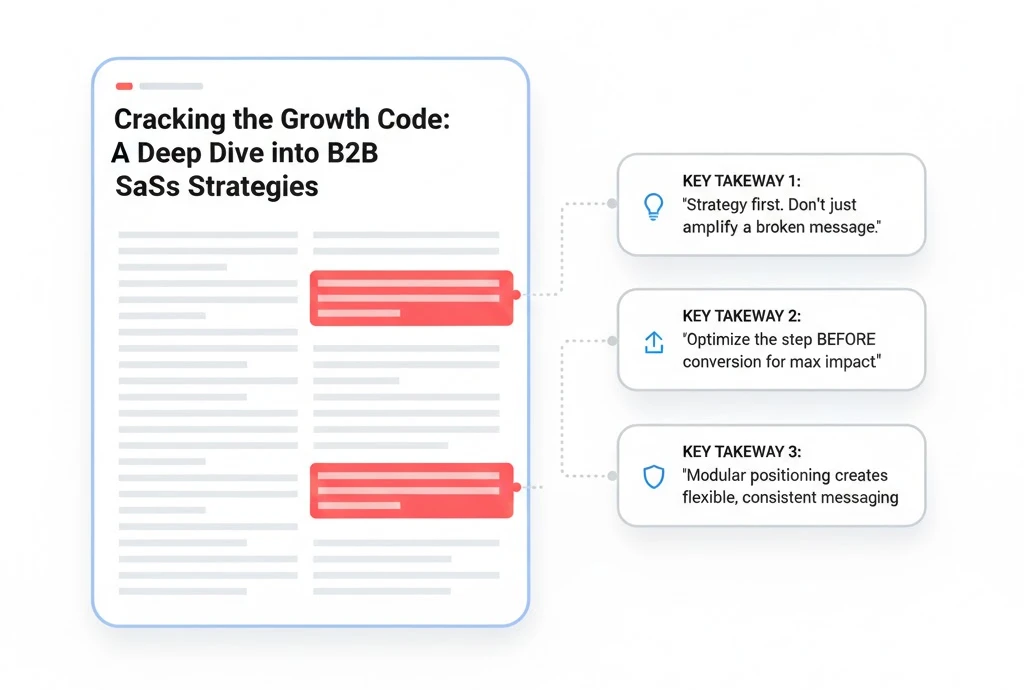
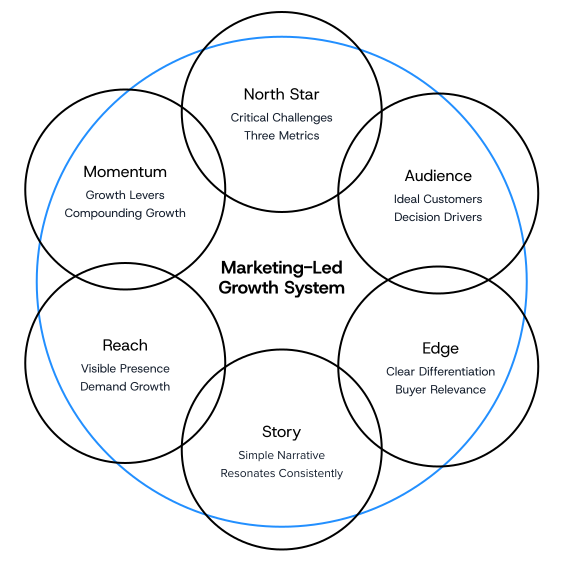
We did this recently with our Marketing-Led Growth System. We have this comprehensive framework that looks at marketing as a system with a foundation and an engine.
While we’ve posted about the overall system, we pulled out one specific insight: your marketing isn’t working because either the foundation is broken or the engine is broken.
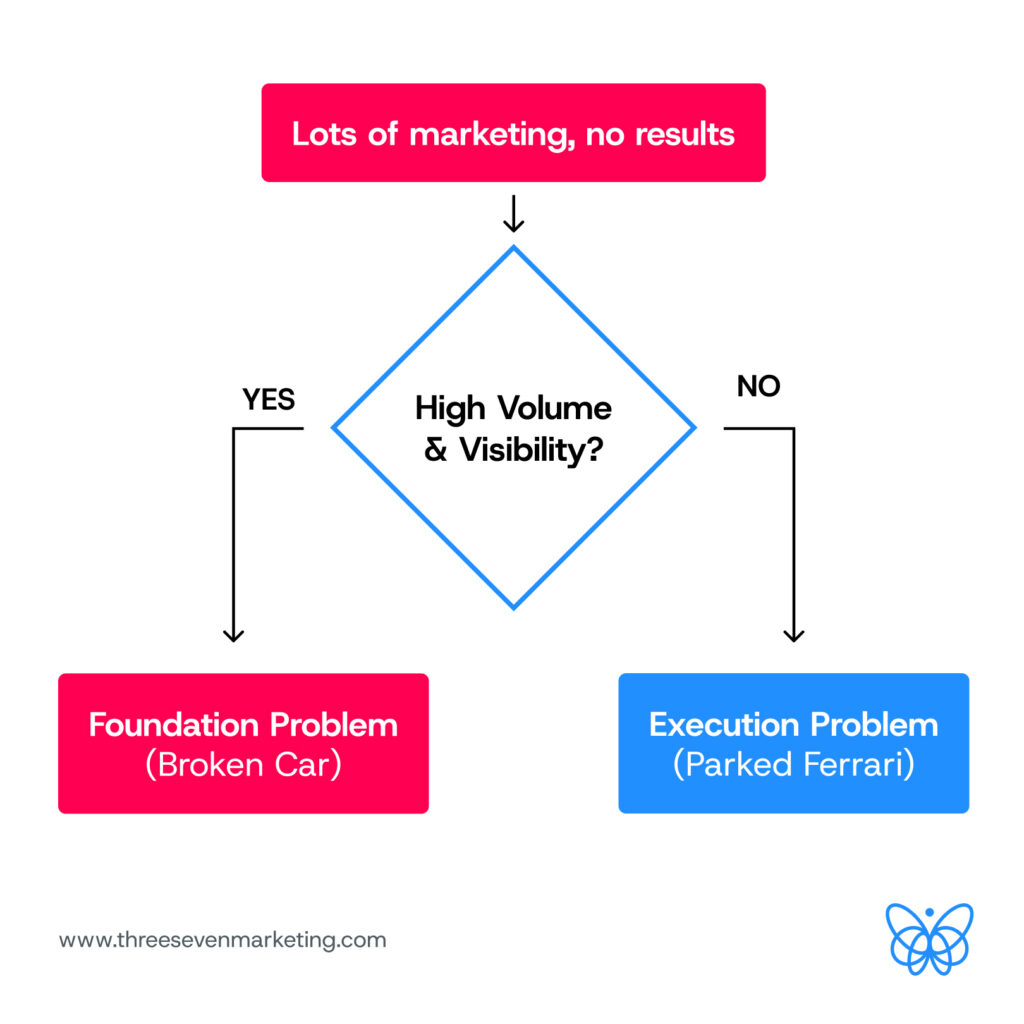
That’s the punchline. The bigger story (how to fix those things) lives in the full framework.
4. Share Natively on Platforms
Publish those punchlines as complete content where your audience already is. LinkedIn posts, X threads, YouTube Shorts, etc…
Give away the full insight.
No teasing.
No “click to read more.”
You used to tease the intro: “We wrote about XYZ. If you want to learn ABC, click here.”
That doesn’t work anymore.
Instead, you give them the conclusion, the main takeaway. That’s what makes them remember you, drives engagement, helps with positioning, and makes them more likely to search for you later or want to read the additional context.
5. Track Brand Lift, Not Clicks
Shift your focus from traffic and clicks to brand searches, direct traffic, and engagement signals like saves, shares, and comments.
You need to look at both leading and lagging indicators. Leading indicators (impressions and engagement) tell you if people are actually seeing and interacting with your content. If you’re creating content that gets no impressions and no engagement, you can be pretty sure you won’t see increases in brand search or traffic.
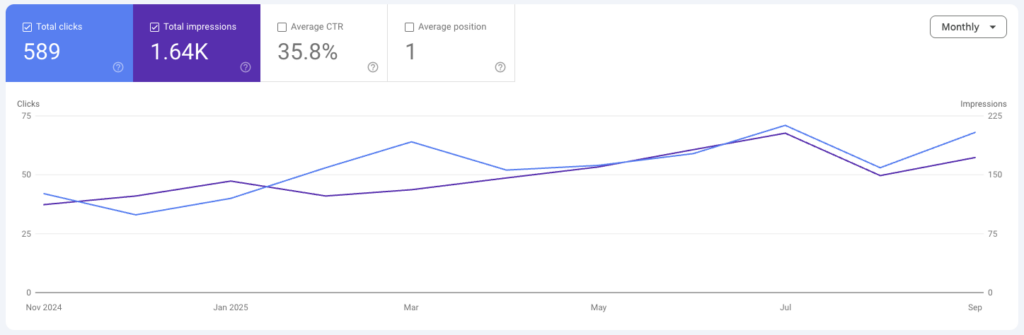
Lagging indicators like direct traffic, branded search volume, and overall website traffic show you the impact over time. These take longer to move. Maybe a month or two before the change is significant enough to notice. Check them weekly or monthly, but keep in mind you’re looking for correlation, not immediate cause-and-effect.
If you’re doing a lot of promotional work and these numbers are going up, that’s your signal. If nothing’s happening or they’re going down, whatever you’re doing isn’t making an impact.
The Mindset Shift
Simply put, you need to change how you think about content marketing.
Old model
Content → Impressions → Clicks → ConversionsNew model
Content → Awareness → Affinity → Brand Search → Conversion
It’s slower. Harder to measure. But it works.
The platforms are walled gardens now. The old playbook of “publish and drive traffic” doesn’t work anymore. Top-of-funnel content still builds awareness when you share the full value natively, but getting there requires rethinking the metrics you care about and the patience to let the compound effect happen.
What About Giving Away Too Much?
I get this question a lot: if you give away your best insights for free, why would anyone hire you or buy from you?
Information is rarely the problem. Execution and implementation are.
Take EOS (The Entrepreneurial Operating System) as an example. You can buy a book for less than $20 that gives you everything you need to implement EOS in your business. But most people, even with all that information, struggle to actually do it. They end up hiring implementers, buying additional resources, taking classes, and purchasing software.
They give you the information to get you sold on the idea. Once you’re sold, the challenge shifts to implementation, and that’s where people are willing to invest.
Your content works the same way. Give them the punchline. Help them understand the problem and see the solution. The people who need help executing will find you when they’re ready.