
- Web Design
- Published 03/30/2026
Why Your B2B Website Isn’t Generating Leads (And What to Do About It)
Summarize this post
Summary:
Most B2B websites don’t generate leads because they were built to inform, not to persuade. The five most common causes are wrong traffic, weak positioning, insufficient trust signals, conversion points that don’t match where buyers actually are in their journey, and no measurement system to improve over time. Fixing it requires aligning strategy, messaging, and design together, not just redesigning the site.
The traffic is there. Google Analytics shows people visiting. But the phone isn’t ringing and the contact form is quiet. Every new piece of business still traces back to someone your sales team called, an old relationship, or a referral.
If that’s your situation, you’re probably asking some version of the same question: why isn’t the website working?
The honest answer is that most B2B websites weren’t built to generate leads. They were built to inform. They explain what a company does and give prospects somewhere to go when they want to learn more. That’s a different job. And if you’ve built a website to do one job but you need it to do another, you’re going to be disappointed by the results.
Before you assume it’s a copy problem or a design problem or a budget problem, it’s worth understanding what’s actually driving the outcome. Most of the time, it comes down to one of five root causes.
Often it’s more than one.
Root Cause 1: You’re Not Getting the Right People to Your Site
This is the first thing to rule out, because if this is the issue, nothing else matters. You can have the best website in your industry and if the people finding it aren’t the people who would hire you, it isn’t going to convert.
This is more common than it sounds. A company gets some traction with content marketing, starts ranking for a handful of keywords, sees traffic climb, and assumes that traffic represents potential buyers.
Sometimes it does. Often it doesn’t.
What it looks like
Your analytics show healthy visitor numbers, but when you look at where they’re coming from and what they’re searching for, it doesn’t map to your actual buyers. You might be attracting researchers, students, competitors, or people solving a slightly different problem than the one you solve.
What to do about it
Before you touch the website, get clear on who your actual buyer is and how they search.
- What problems are they trying to solve at the moment they’d consider hiring someone like you?
- What keywords would they use?
- Where else do they spend time online?
Audit your traffic against that profile. If there’s a significant mismatch, the traffic problem has to be solved before the conversion problem.
Root Cause 2: Your Messaging Isn’t Compelling to the Buyer
Assuming the right people are finding your site, the next question is whether what they find when they get there is actually convincing.
Most B2B sites fail here in one of two ways.
The first is obvious, the messaging is generic.
Claims like “we deliver results,” “we’re committed to quality,” “we’re a trusted partner,” or language that could appear on any competitor’s site don’t give a buyer any reason to choose you.
The second failure is subtler… the messaging is specific to your company but not meaningful to your buyer.
This happens when a website is written from the inside out, organized around how the company thinks about itself rather than how a buyer thinks about their problem.
This is a positioning problem, and it doesn’t get solved by rewriting headlines. It gets solved by doing the work to understand three things:
- Your target audience and what they actually care about when making this type of decision
- Your competitors and how they’re positioned
- The specific ways you’re meaningfully different in ways that matter to that audience.
What it looks like
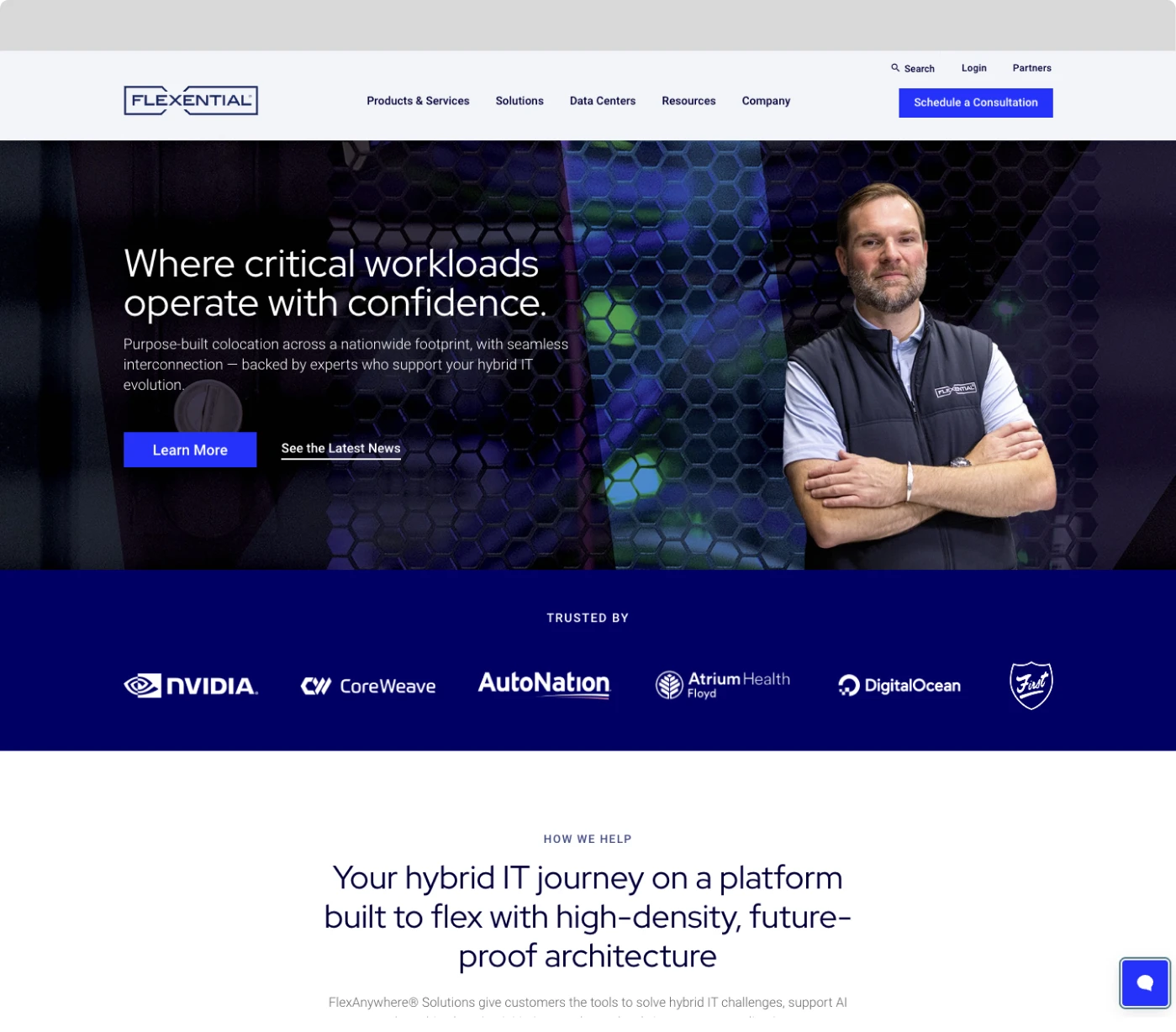
Landing on your homepage, a prospect can’t immediately understand what you do, who you do it for, and what problem you solve. Or they understand those things, but nothing differentiates you from the three other companies they’re also evaluating.
What to do about it
Don’t start with the website. Start with discovery.
Talk to your best customers about why they hired you and what almost made them choose someone else. Look at your competitors’ sites with the same critical eye you’re applying to your own. Find the intersection of what makes you genuinely different and what your buyers actually care about. That’s your positioning. The website messaging comes after.
Root Cause 3: The Site Doesn’t Build Enough Trust
In B2B, risk aversion is extremely high. The person evaluating your company isn’t just trying to solve a problem, they’re making sure they don’t make a mistake. A bad vendor choice reflects on them professionally. In a lot of cases, choosing the safer option matters more than choosing the best option.
People would rather select a vendor they’re confident in than take a chance on one that might outperform.
What this means for your website is that trust signals aren’t optional. They’re load-bearing. If a skeptical buyer can’t find evidence that you’re credible and that others have had success working with you, they’re going to keep looking.
There’s also a visual component to trust that’s easy to overlook. Your audience arrives with a mental model of what a credible company in your space should look like. If your site is significantly out of step with that expectation (dated design, inconsistent visual quality, a look that doesn’t match the sophistication of what you’re actually selling), it creates doubt before a single word gets read.
What it looks like
A technically strong company with genuinely impressive work, but a website that looks like it was built in 2014 and has no social proof, no named clients, no case studies, and no evidence of real outcomes.
What to do about it
Build trust through specifics.
- Logos of recognizable clients
- Stats that demonstrate scale or results
- Case studies that walk through a real problem and a real outcome
- Testimonials attributed to actual people with names and titles
- Associations and certifications relevant to your audience
- Tenure and experience framed in a way that’s meaningful to a buyer trying to assess risk
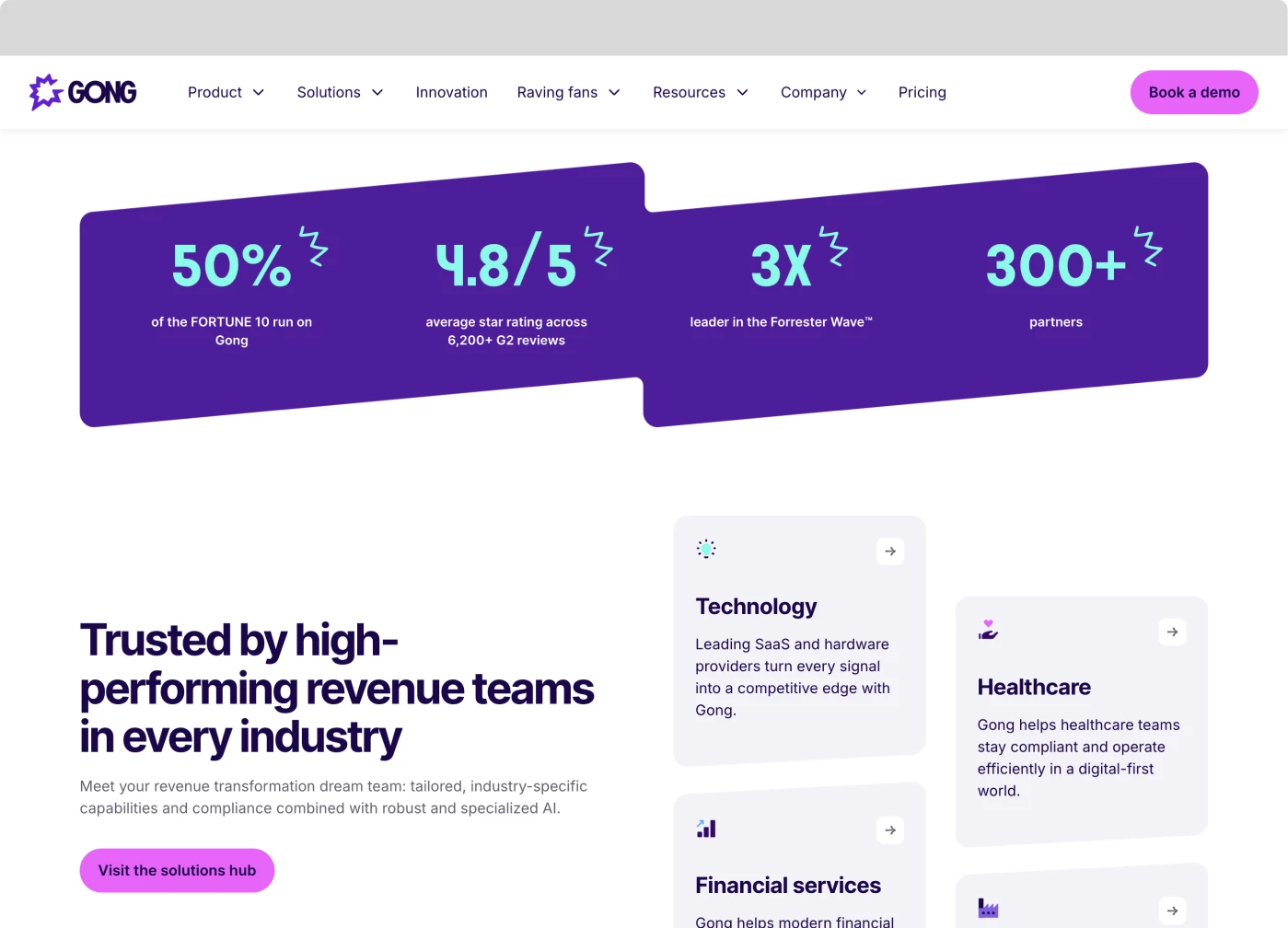
The goal is to give a skeptical person a clear answer to the question: why should I trust these people with this problem?
Root Cause 4: Your Conversion Points Don’t Match Where Buyers Actually Are
Even if your traffic is right, your messaging is compelling, and your trust signals are solid, there’s still a conversion problem that catches a lot of B2B companies off guard.
Gartner has been tracking a growing trend: B2B buyers increasingly want to complete most of their research independently and only engage with a salesperson once they’ve nearly made a decision. They don’t want to talk to you at the beginning of the process.
They want to use your website to learn, evaluate options, and build confidence, then reach out when they’re ready.
If your only conversion point is a “Contact Us” form or a “Schedule a Demo” button, you’re asking buyers to commit to a sales conversation before they’re ready to have one.
Most of them won’t.
They’ll leave and continue researching elsewhere.
What it looks like

A website that does a reasonable job of explaining what the company does, but offers no way for an interested person who isn’t ready to buy to stay in the relationship. Every path leads to a sales conversation or nothing.
What to do about it
Create intermediate conversion points, i.e. places where someone who’s genuinely interested but not ready to commit can exchange their contact information for something valuable.
And valuable is the keyword.
A brochure, a spec sheet, or a generic overview isn’t valuable enough. The standard we use: if your ideal prospect wouldn’t be willing to pay for it, it’s not valuable enough to gate.
Instead, consider:
- A detailed guide that helps them solve a real part of their problem
- A tool that makes their job easier
- An assessment that helps them understand where they stand

These are the kinds of resources a buyer will trade their email address for, and that keep you in the relationship through the research phase.
At the same time, make sure your website gives buyers everything they’d want to know to make an educated decision without having to ask. Answer the questions they know they have. Address the ones they don’t know to ask.
The more you help them think through the problem on your site, the more trust you build before the first real conversation.
Root Cause 5: You’re Not Measuring, So You Can’t Improve
Everything you do on a website at launch is, at best, an educated guess. You’ve thought carefully about your audience, your message, your design. But until real buyers interact with it, you don’t actually know what’s working.
Most B2B companies set up basic analytics and leave it there. They can see overall traffic. They might track contact form submissions. But they can’t see where interested people are dropping off, which content is actually moving people toward a decision, or what a visitor who eventually converts looks like compared to one who doesn’t.
What it looks like
After a launch or a redesign, the question “is the new site performing better?” gets answered by whether leads went up overall, a metric that mixes too many variables to be meaningful. Nobody can point to a specific page or flow and say confidently why it is or isn’t converting.
What to do about it
Set up measurement before you need it. Track meaningful events; Not just pageviews, but which content people are engaging with, where they’re exiting, and what path visitors take who eventually convert versus those who don’t.
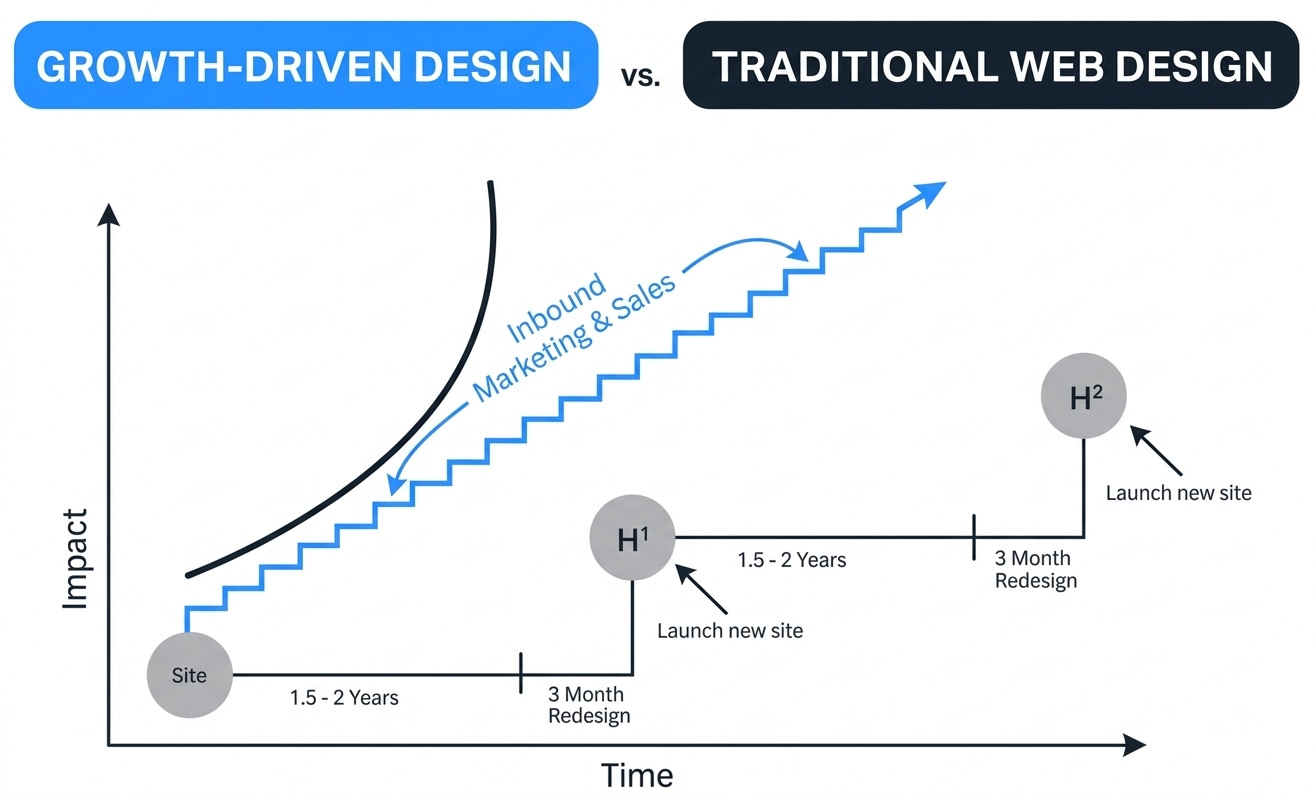
Then review it consistently and use it to make decisions.
Every website at launch is a hypothesis. Measurement is how you find out if you’re right.
The Actual Problem
The reason all of this is hard is that a B2B website that doesn’t generate leads isn’t a website problem. It’s a marketing system problem.
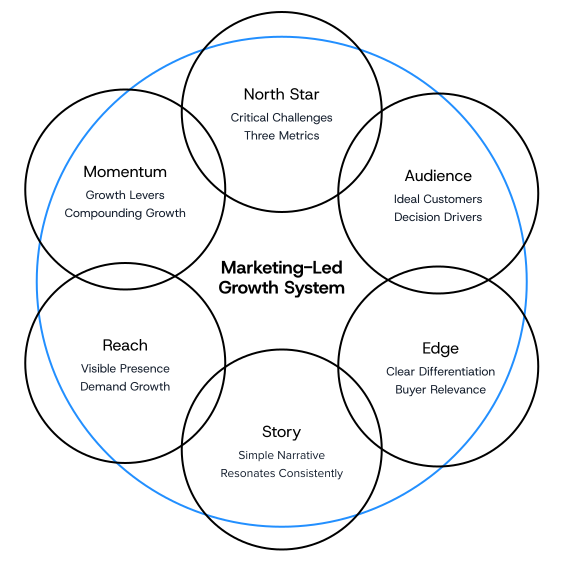
The website is downstream of everything else. It reflects how well you understand your audience, how clearly you’ve defined your positioning, how effectively you’ve translated that positioning into messaging, and how well you’re getting that message in front of the right people. If any of those components is weak, the website reflects it.
That’s why a redesign without strategy rarely fixes a lead generation problem. You can make a site look better without changing what it says or who it reaches. The look improves. The outcomes don’t.
The companies that turn their websites into real lead generation assets treat it as a system, starting with a clear understanding of who they’re trying to reach and what those people need to believe before they act, building the website around that, putting it in front of the right audience, and then running a continuous loop of measurement and improvement.
It’s a longer process than a redesign. But it’s the one that actually works.