


Marketing strategy for B2B companies where the tactics are right but the results aren’t.
When the campaigns look right but the results don’t follow — when you can’t quite name why things aren’t clicking — the problem is usually in the positioning or messaging underneath. Strategy is the work of finding it before more gets built on the same foundation.
The difference between a marketing plan and a marketing strategy
A strategic plan documents what to do — channels, budgets, timelines. A marketing strategy answers a different question first: is the positioning strong enough for any of that execution to work?

What a marketing plan covers:
Which channels to use, how much to spend, what to produce, and when. Your goals and KPIs, and a roadmap for hitting them.
What a marketing strategy covers:
Who your buyer actually is and how they think about the problem. Whether your positioning reflects that clearly enough to move them to act.
What a marketing plan leaves unexamined
Whether the direction is right. If the positioning isn’t landing with the buyer, the execution built on it won’t produce results — and nothing in the plan will surface that.
What a marketing strategy surfaces
Whether your positioning is landing with the right buyer. And what needs to change before more execution gets built on it.

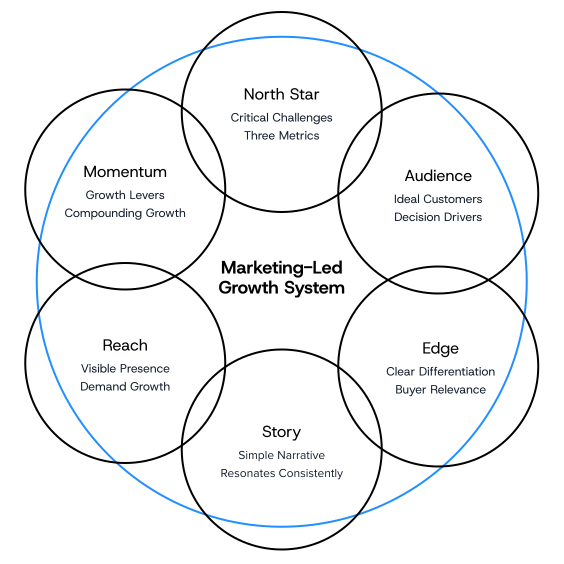
Six things that determine whether your marketing produces results
Once the strategy and structure are clear, execution is where everything comes together. We bring hands-on experience across platforms, design, messaging, and optimization to build websites that are flexible, scalable, and designed to support real business goals — not just launch day.
North Star
Without a clear definition of what success looks like, and how to measure it, marketing runs without a real target. Numbers can look strong while nothing is moving toward revenue. Or the right work gets killed because lagging indicators haven’t caught up yet. In a long sales cycle, it can take close to a year for marketing activity to show up in pipeline.
Without leading indicators that tell you whether the foundation is working, good strategy gets abandoned too early.
Audience
Target the wrong audience and conversion breaks down at every channel, not because the ads are wrong or the website is wrong, but because the foundation is wrong.
Every downstream decision, like which channels to build and what the creative says, builds on the audience definition. When that definition is based on intuition rather than research, the work that follows is optimizing toward the wrong person.
Positioning
Reaching the right audience isn’t enough if the positioning doesn’t give them a reason to choose you over the other options they’re comparing.
Positioning is what makes you the obvious answer to their specific problem, not what you think differentiates you, but what they actually value. Without it, campaigns drive traffic but not decisions.
Messaging
Even clear positioning fails if it isn’t communicated in a way that connects. Messaging is how the brand edge gets expressed, the language that matches how your buyer describes the problem, the story that makes your solution feel like the natural answer.
When the messaging is off, buyers understand what you do but don’t feel the urgency to act on it.
Reach
With audience and positioning set, the promotion still has to reach buyers where they actually pay attention, not where competitors happen to be active. The common failure is spreading effort thin across too many channels at once.
Momentum
The foundation can be solid and the channels can be right, but if the marketing volume isn’t there — enough touchpoints sustained over time — the engine doesn’t build. In B2B, fewer than 10% of your audience is ready to buy at any given moment. A marketing program that runs in bursts doesn’t accumulate enough presence with the buyers who aren’t ready yet.
Every engagement starts with strategy
Every Three Seven engagement runs through the Marketing-Led Growth (MLG) framework — a diagnostic process that identifies which of the six foundations are limiting your results and works them in the right order.
First call
A 30-minute qualifying conversation. We ask direct questions about what you’ve tried and where results have been falling short. If there’s not a fit, we say so early.
Assessment
A structured evaluation of your marketing against the six MLG foundations. This identifies which foundations are limiting your results and defines the scope of the work ahead.
Workshops
A series of collaborative sessions focused on the foundations the assessment identified. We take a lean approach no months of discovery, no lengthy decks.
Roadmap
A documented strategy built directly from the workshop outputs. Priorities in order, with reasoning your team can use to defend them internally.

Start a conversation
The first call is an honest assessment, not a pitch.
30 minutes to figure out whether we’re the right fit. If we’re not, we’ll tell you who is.
Month-to-month contracts. If you don’t approve the strategy, we refund your deposit.
Insulgard saw a 7,900% increase in leads
We helped Insulgard identify that their primary audience wasn’t building owners or construction companies; they were the architects defining the materials and specifications.
After repositioning and a channel rebuild, they went from nearly zero leads per month to 50-80.
“From the onset, they personalized the experience, identifying what differentiated us from our competition and using those strengths to build a site in which we’ve realized immediate benefits.”

Steve Hurley
General Manager, Insulgard Security Products

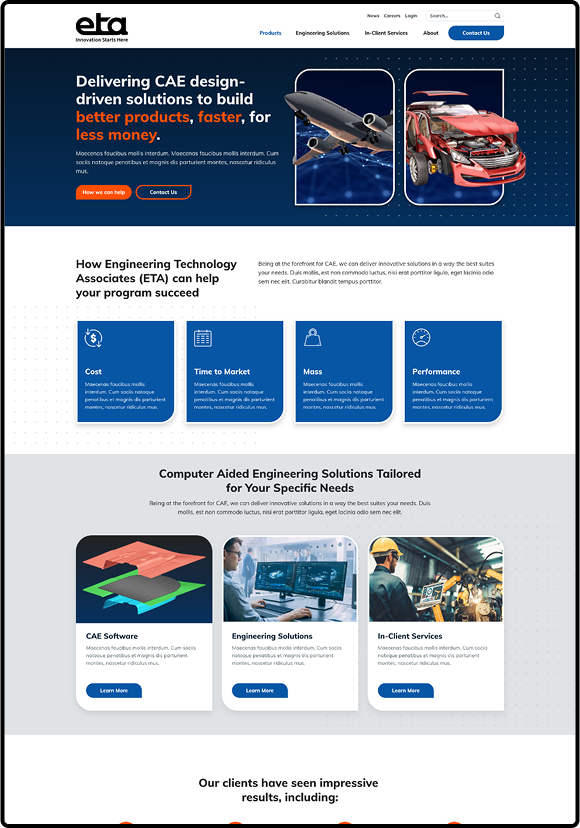
Engineering Technology Associates, Inc saw a 2,000% increase in leads
We helped Engineering Technology Associates identify their core differentiators, reach their ideal audience, and speak to them in a way that drove them to action.
The marketing strategy informed a website redesign and multi-channel campaign launch they saw a 2,000% increase in monthly leads.
“We can confidently say we’ve met 100% of the goals we were looking to achieve 1 year ago. There aren’t many other companies we’ve worked with where we can say the same.“

JT Pedersen
Director of Software Sales, N.A. at ETA, Inc.
Your six foundations scored. A roadmap of what to fix first.
Request a free marketing assessment, and we’ll use the MLG framework to score your marketing across all six foundations. Where there are gaps, it identifies them with enough specificity to act on — which foundation is the binding constraint, and what a stronger version would require.


A prioritized marketing roadmap to results.
What you receive at the end is a sequenced roadmap: the specific initiatives to prioritize so you can start building demand consistently, not just when someone makes an introduction.
No call required. The output is yours regardless of what comes next.

Start a conversation
The first call is an honest assessment, not a pitch.
30 minutes to figure out whether we’re the right fit. If we’re not, we’ll tell you who is. Month-to-month contracts. If you don’t approve the strategy, we refund your deposit.