
- Digital and Design Strategy
- Digital Marketing
- Published 07/21/2026
The End-to-End B2B Marketing Audit: Foundation, Channels, Back End
Summarize this post

Oftentimes when companies reach out to us, it’s because they want help with a channel — get SEO working, fix the ad spend, figure out email. One of our first steps, regardless of scope, is to do an end-to-end marketing audit. However, many marketing audits primarily focus on channels, missing the biggest areas for improvement.
Your marketing channels actually sit in the middle; your overall marketing strategy comes first, and your post-lead marketing comes after.
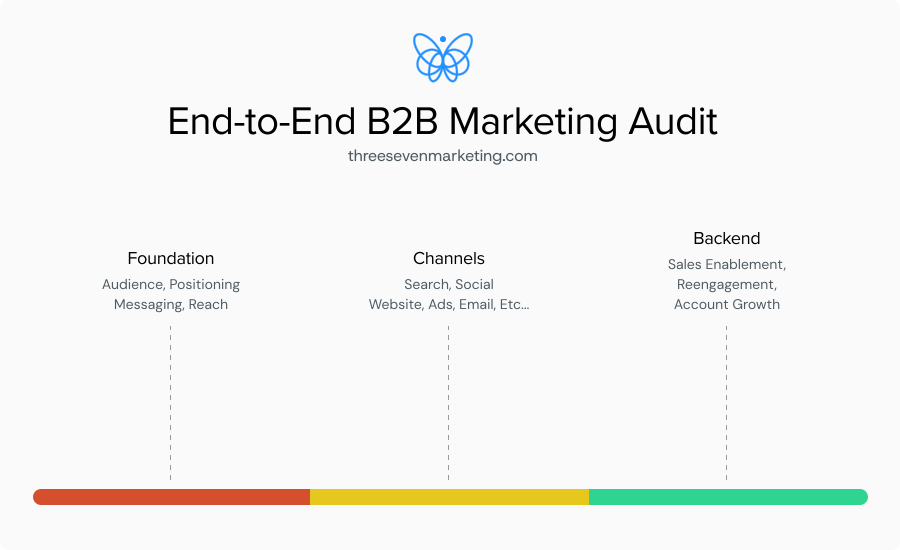
Here’s how we think about a more complete audit. Three layers, in order: your foundation, your channels, and the backend.
Layer 1: Your marketing foundation
This is where you start, and most audits skip it entirely.
We run this layer against a system we call Marketing-Led Growth: audience, positioning, messaging, and reach, in that order — because each one depends on the one before it.
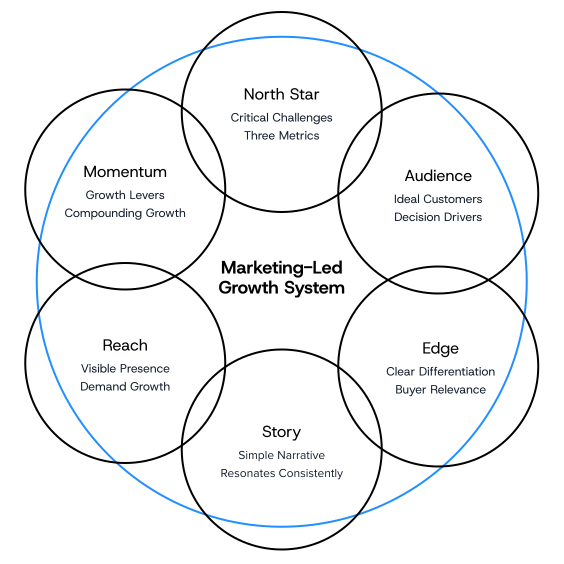
Four things to look at:
Audience
How well do you actually know your buyers? Not just who they are, how they think, what they respond to, where they spend time. Have you validated those assumptions, or are they just inherited beliefs nobody’s tested?
This is the gap Marketing-Led Growth’s audience work is built to close: the difference between a buyer profile someone wrote once in a slide deck and one that’s actually been validated against real behavior. If your last audience research happened before the product changed, the market shifted, or your ICP moved upmarket, you’re not auditing your actual buyers. You’re auditing who they used to be.
Positioning
Do you know what makes you meaningfully different in ways that actually matter to your buyers? Can you say clearly: this is why you pick us, and this is when you pick us?
We worked with a company that helps enterprises implement software automation. Their messaging was built around convincing buyers that automation was worth investing in. But their audience was already sold on automation, they just needed to know why this company specifically. No channel audit would have caught that. You’d have just put more budget behind the wrong message.
Messaging
Does your positioning translate into something your audience understands and responds to? Not what you want to say, what they actually hear.
Start with how the conversation is framed internally. If your team’s discussions about messaging and copy revolve around “what do we want to tell them about us,” you’re already off track. The question that matters is “what are they looking for?” One is inward-facing. The other is the only one your buyer cares about.
Then check for consistency. Pull every message you’re pushing across every channel right now — ads, website, sales decks, social. Can you tie all of it back to three or four core themes? If you can’t, you’re not consistent enough, and consistency is what makes messaging work.
This matters because of how memory actually works. Marketers have leaned on some version of the “Rule of Seven” since the 1920s: a buyer generally needs multiple exposures, often cited around seven, before a message sticks (University of Maryland). The exact number is more folklore than lab result, but the underlying logic holds: say something different every time, and repetition never accumulates. People never get to categorize you in their head. The brands that own a category distilled themselves into one line and repeated it relentlessly: BMW is “the ultimate driving machine.” Nike owns “the best shoes for runners” in a lot of people’s heads. If your messaging isn’t reinforcing one core idea, expressed three or four ways at most, it’s not going to stick.
Reach
Are you marketing where your buyers actually spend time, or are you active on channels that feel familiar rather than channels that actually work?
We had a client selling automotive training seminars who put most of their budget into LinkedIn (organic and paid) because it’s “the business social network” and the targeting looked precise on paper. What we found: the people they were targeting weren’t scrolling LinkedIn and suddenly deciding their team needed training. We were reaching the right people, at the wrong moment, in a channel that doesn’t match how the decision actually gets made. What those buyers did do, once a new standard or requirement triggered the need, was search for training on Google. That’s where the intent showed up. That’s where the budget needed to be.
This foundation layer matters because it gives you the context to evaluate everything else. If your Google Ads aren’t working, you need to know whether that’s a channel problem or a messaging problem before you make a call.
Layer 2: Your channels
Now you look at what you’re actually running. For each channel, work through these:
Strategy
Is there a coherent plan behind this channel, or is it just activity? Do you know what you’re trying to accomplish and how this channel fits into the bigger picture?
Strategy also means checking whether your approach within the channel actually works, not just whether the channel is right. LinkedIn might be exactly where your buyers are, but posting from your company page and hoping for organic reach rarely gets you there. Thought leadership from individual people on your team almost always outperforms a brand account, because people engage with people. Same channel, different approach, completely different result.
Messaging
Is what you’re saying on this channel consistent with your positioning? Is it landing with the right audience? We covered messaging in depth in the foundation layer, so we won’t repeat it here — the short version: every channel needs to reinforce the same three or four core themes, not invent new ones.
Targeting and reach
Are you actually getting in front of the right people, in the right places, at the right time?
Volume and frequency
How many touchpoints are you generating? How long has this channel been running consistently? A lot of channels get written off before they’ve had enough runway to show results.
This connects directly back to the Rule of Seven from earlier: if people need multiple exposures before a message sticks, one post or one ad isn’t a channel test; it’s a data point. And exposures aren’t as reliable as they look on a dashboard. A single “impression” can mean someone scrolled straight past your ad without registering it at all. Volume matters, but only the volume that actually lands.
There’s also a psychological tailwind working in your favor here that most teams don’t account for. Recency bias means people weigh what they’ve seen most recently more heavily than what they saw weeks ago. And the more often you show up, the more familiar and trustworthy you start to feel. This is a version of the mere exposure effect, where repeated exposure builds preference on its own, independent of how persuasive the content actually is. Show up consistently and frequently, and you get a compounding advantage a one-off campaign never will.
Content
Is the content itself good? Is it relevant, useful, and credible to your audience?
There’s more content online right now than at any point before. AI has made publishing nearly effortless, which means more noise, not more signal. That raises the bar on what actually cuts through. Content that solves a problem your ICP is genuinely stuck on, backed by your own experience or insight, and offering more depth or a different angle than what’s already indexed, still gets attention. Content that just restates what’s already out there doesn’t.
Engagement
Are you responding to comments, following up with prospects, engaging with others’ content, being proactive? Especially on social, showing up isn’t the same as participating.
A thoughtful comment on someone else’s trending post will often get you more visibility and engagement than another post of your own. You’re borrowing an audience that’s already paying attention instead of trying to build one from scratch every time.
Performance
If you’re in marketing, I don’t need to belabor the importance of establishing and measuring KPIs. That said, are you actually tracking the right KPIs? You need both leading and lagging indicators.
Most marketing exists to eventually drive revenue, but revenue rarely shows up overnight, especially in B2B, where sales cycles can run months. If the only things you’re tracking are bottom-of-funnel metrics like leads and closed deals, you’ll end up killing channels that are actually working; they just haven’t had time to show it yet.
You need leading indicators too: signals that tell you whether you’re moving in the right direction before the lagging ones (leads, revenue) catch up. We’ll come back to this at the end, because it matters for the whole audit, not just individual channels.
Focus
Once you’ve evaluated each channel, you should prioritize your efforts in this order:
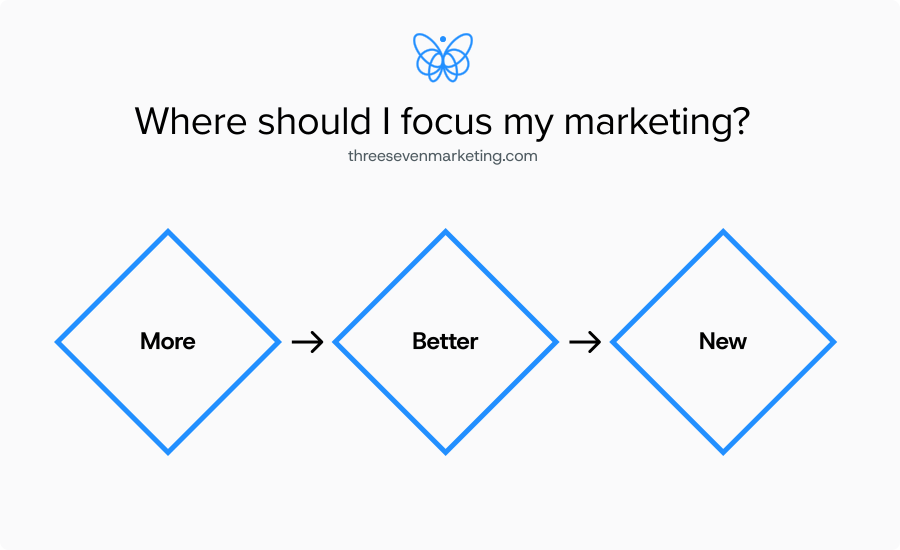
More
What’s already working that you should do more of. More content, more ad spend, more outreach.
Better
What’s working but could work better. Stronger targeting, more compelling offers, better content quality.
New
What you should try that you’re not doing yet. New channels, new messages, new formats. For the “new” piece, you’re looking at two signals: your audience research (where do your buyers actually spend time?) and your competitive research (where are competitors getting traction?). Both are worth considering.
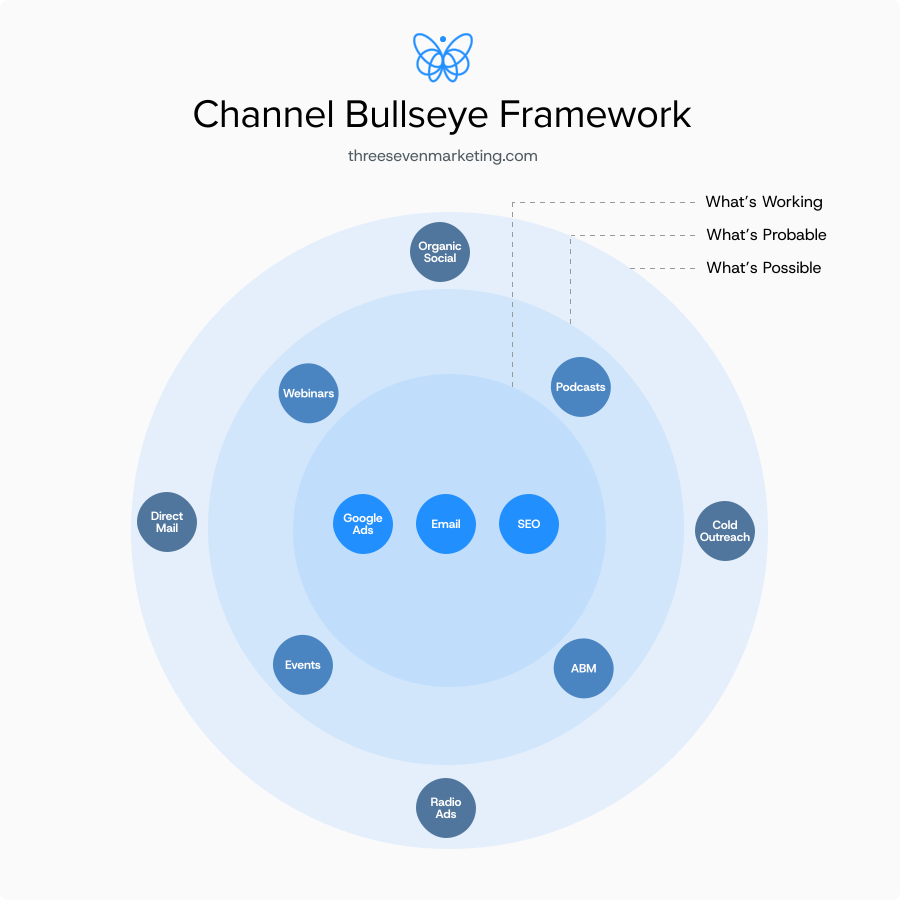
We use the Traction Bullseye Method to prioritize. Pick the three channels most likely to work (either because they already are, or because your research says they should) and focus there first. Once those are producing, you expand outward. Most teams spread too thin too early and end up with mediocre results across five channels instead of strong results on two.
Layer 3: The back end
This is the layer almost every audit ignores, and it’s actually two problems stacked together: what happens to a lead after marketing hands it off, and what happens to a customer after they buy.
Start with the handoff. We mentioned earlier that we’ve worked with teams generating plenty of leads with nothing happening once those leads reach sales. That’s a back-end problem, not a channel problem, and no amount of additional traffic fixes it. If leads are dying in the handoff, are you helping sales close what marketing already found — follow-up sequences, sales enablement content, lead scoring that tells sales who’s actually ready?
Then there’s what happens after someone becomes a customer. Most audits are entirely focused on acquisition. But in B2B, your existing clients are a marketing opportunity too. Are you marketing to them? Are you driving retention, expansion, referrals, advocacy?
Marketing doesn’t stop when someone signs. In a lot of B2B companies, the easiest growth available isn’t new logos — it’s doing more with the clients you already have. If your audit only covers acquisition, you’re looking at half the funnel and calling it the whole picture.
Tying it together: Measurement
One more thing worth adding at the end of any audit: measurement. Have you identified a small set of leading and lagging indicators that connect to real business outcomes? Not a dashboard full of numbers — a short list that tells you whether you’re actually moving in the right direction.
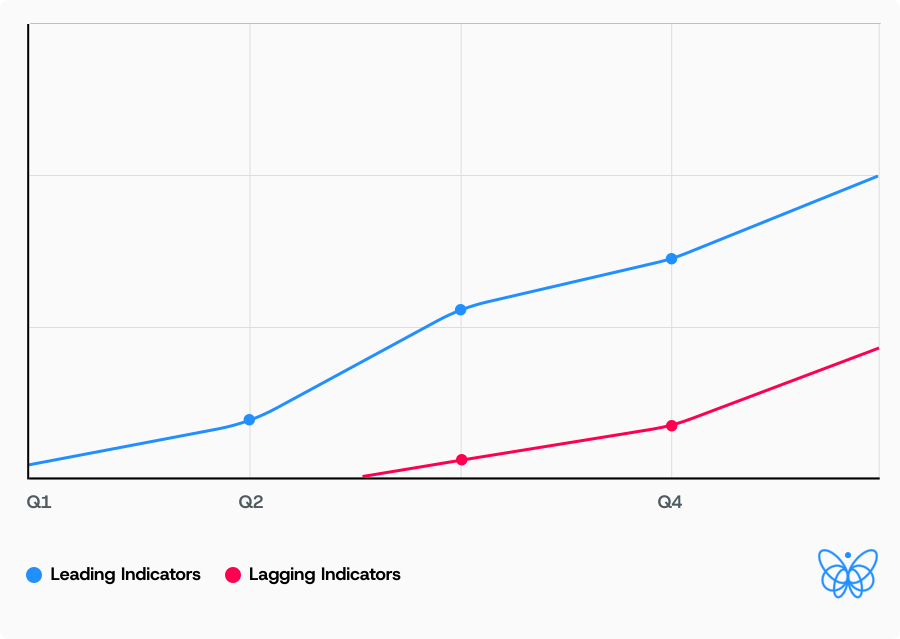
We touched on this earlier at the channel level: don’t judge a campaign only by lagging indicators like leads or revenue, especially in B2B, where those numbers take months to show up. The same logic applies to the whole audit. Your foundation, your channels, and your back end all need their own leading indicators — signals that tell you whether the layer underneath is actually working before the lagging numbers confirm it months later.
Most teams are tracking everything and understanding nothing. A short, deliberate list beats a full dashboard every time.