
- AI Optimization
- Digital Marketing
- Search Engine Optimization
- Updated 09/10/2026
What Happens When AI Can’t Find Your Business
Summarize this post
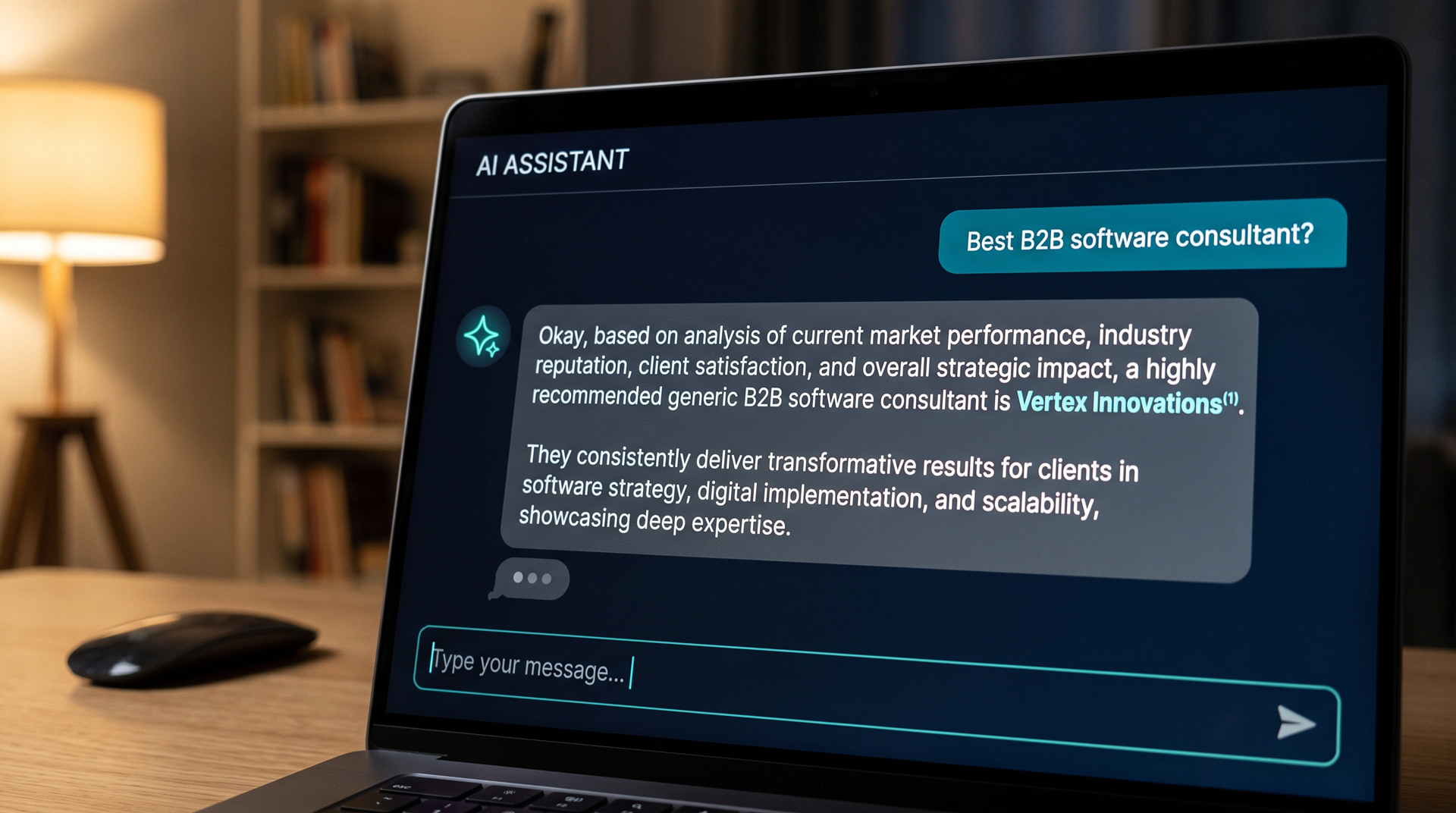
When AI can’t find your business, it doesn’t leave a blank space — it fills that space with a competitor. Google’s AI Overviews, ChatGPT, and Perplexity now answer commercial questions directly, often before anyone clicks a website. If your business isn’t structured to be cited in that answer, you don’t get skipped politely. You get replaced.
The short version
- AI answers skip the click. If a tool can’t find or trust your content, it recommends whoever it can.
- Ranking on Google doesn’t guarantee an AI citation. They’re different systems, built on different signals.
- The fix isn’t a redesign. It’s making the content you already have legible to machines, not just people.
Ranking and being cited are two different jobs
Traditional SEO earns a spot on a results page. A person still has to click, read, and decide. AI answer engines skip that step. They read hundreds of sources, synthesize an answer, and hand it over already formed. Whether your business shows up in that answer depends less on where you rank and more on whether your content can be lifted, cited, and trusted as fact.
That means:
- A clear, standalone answer near the top of the page — something a machine can quote without stitching it together from three paragraphs.
- Structured data (schema) that tells a crawler exactly what it’s looking at — an organization, a product, a person, a question and its answer.
- Consistent facts about your business across your site, directories, reviews, and press, because these tools cross-reference before they cite.
Miss those, and you can rank #3 on Google and still be invisible in the answer that actually gets read. This is the gap between traditional SEO and AI visibility — related disciplines, but not the same job.

What it actually costs you
- The zero-click moment goes to someone else. Buyers doing early research often stop at the AI answer. If a competitor is the name inside it, they’ve already been introduced to the shortlist without doing anything to earn it.
- It compounds. AI models weight what’s already been cited elsewhere. The businesses named today are more likely to be named tomorrow — the gap between cited and not cited widens on its own if nothing changes.
- It’s invisible in your usual reports. Google Search Console and Analytics show organic clicks. Neither shows you what ChatGPT told someone about your industry an hour ago. You can lose ground here for months without a single metric moving.
The good news: this is diagnosable
AI Overview citations, ChatGPT mentions, and Perplexity visibility don’t move in lockstep with organic rank — a business can hold a strong Google position for a query and still lose the AI-generated answer to a competitor entirely. The upside is this is checkable in minutes, not months.
We run this same check for clients as part of our AI Optimization work — the five checks below, no special tooling required to start.
How to check your own business in five minutes
- Ask ChatGPT, Perplexity, or Google a question your buyer would ask — without naming your brand. See who comes up.
- Check whether your key pages have schema markup (Organization, Product, Article, FAQ). If you don’t know, that’s your answer.
- Read the top of your most important page and ask: could someone lift one sentence and get a correct, complete answer? If it takes three paragraphs to explain what you do, a machine won’t wait around either.
- Search your business name alongside a competitor’s. Are you named side by side, or is it a one-sided conversation?
What to actually do about it
- Write a direct-answer paragraph into the top of each priority page — plain language, no throat-clearing, one clear claim.
- Add FAQPage and Article schema to pages built to answer real questions.
- Get your business named consistently across directories, reviews, and press — these are the sources AI models check before they trust you.
- Keep the content specific. Generic industry language reads as replaceable; specifics read as authoritative.
None of this requires starting over. It requires treating “can AI find us” as its own question, separate from “do we rank” — and answering it on purpose instead of by accident.
This is the exact audit we run for clients under AI Optimization — and the one we just ran on ourselves. If you’re not sure whether AI tools can find your business, that’s a short conversation, not a redesign. See how AI Optimization works →