

Project overview
Background
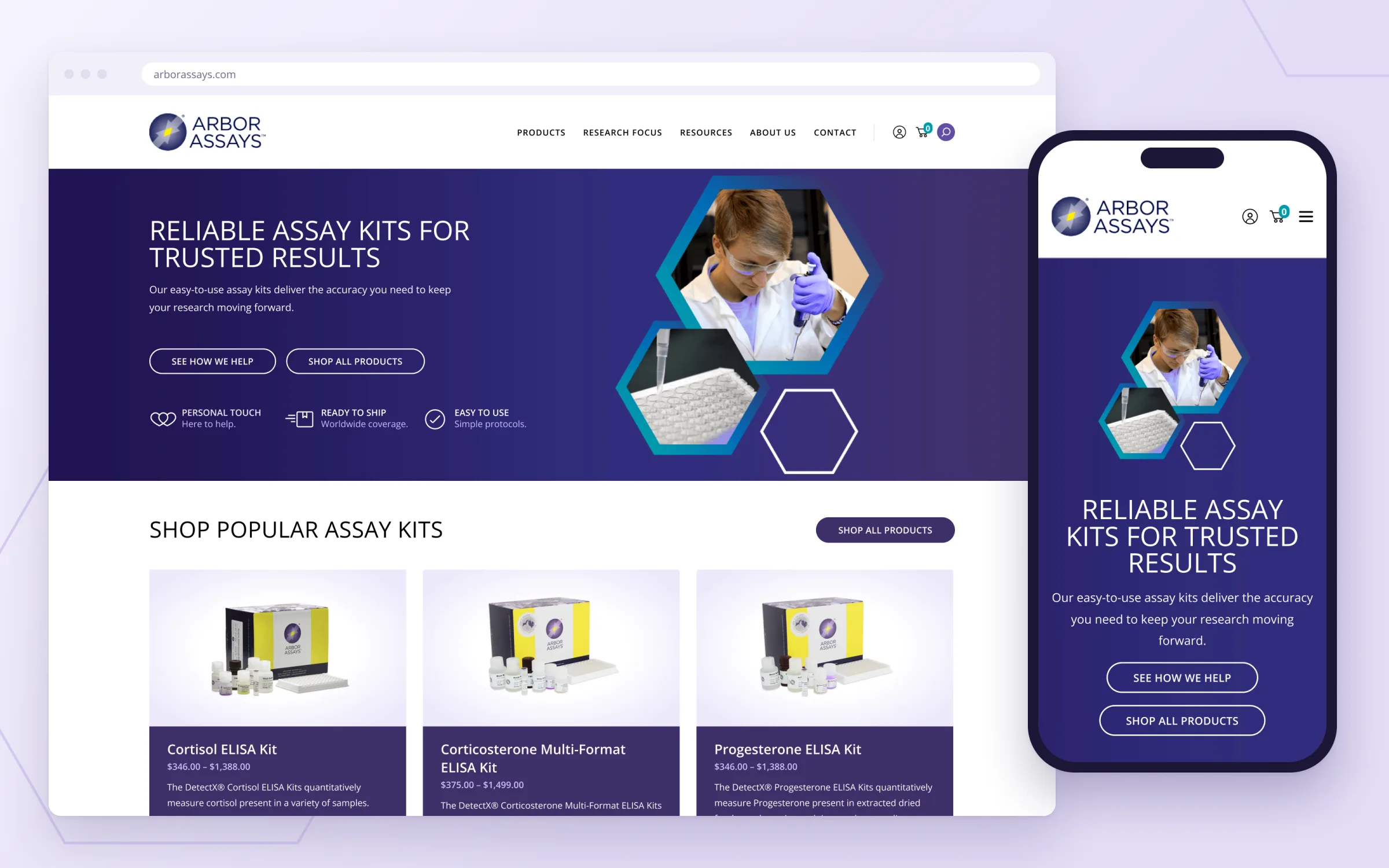
Arbor Assays makes ELISA and immunoassay kits for hormone and biomarker research and sells them through its own WooCommerce store. We’ve been Arbor Assays’ web partner since 2012. When Arbor Assays updated its brand guide in 2024, it asked us to refresh the site to match, and to make it easier to use. Discovery showed where the site was failing researchers: they couldn’t easily find the right kit for their species and sample type.
Issues to solve
- Products were hard to find. An alphabetical list and clumsy search covered 1,238 products and pack sizes.
- The top question had no quick answer. “Can I use this kit on my animal?” Arbor Assays’ kits are published in about 150 species.
- Scientists trust citations over sales copy. Publications were listed, but not by species or sample type.
- One site, very different buyers. Zoo researchers and pharma teams expect different things from a supplier.
- Shipping didn’t fit a standard calculator. Box choice depended on the products ordered, and some kits needed dry ice.
Our solution
We rebuilt the store around research focus and buyer type, and organized each product’s publications so researchers can see the studies that match theirs.
The Saturation Dive and strategy that found what researchers check before they order
Our Saturation Dive is a working session where we go through a client’s business, buyers and competitors before any design starts. With Arbor Assays it sharpened the brief. The team told us their most common question was “can I use X kit on Y animal,” and that scientists are swayed by citations far more than by a company selling to them.
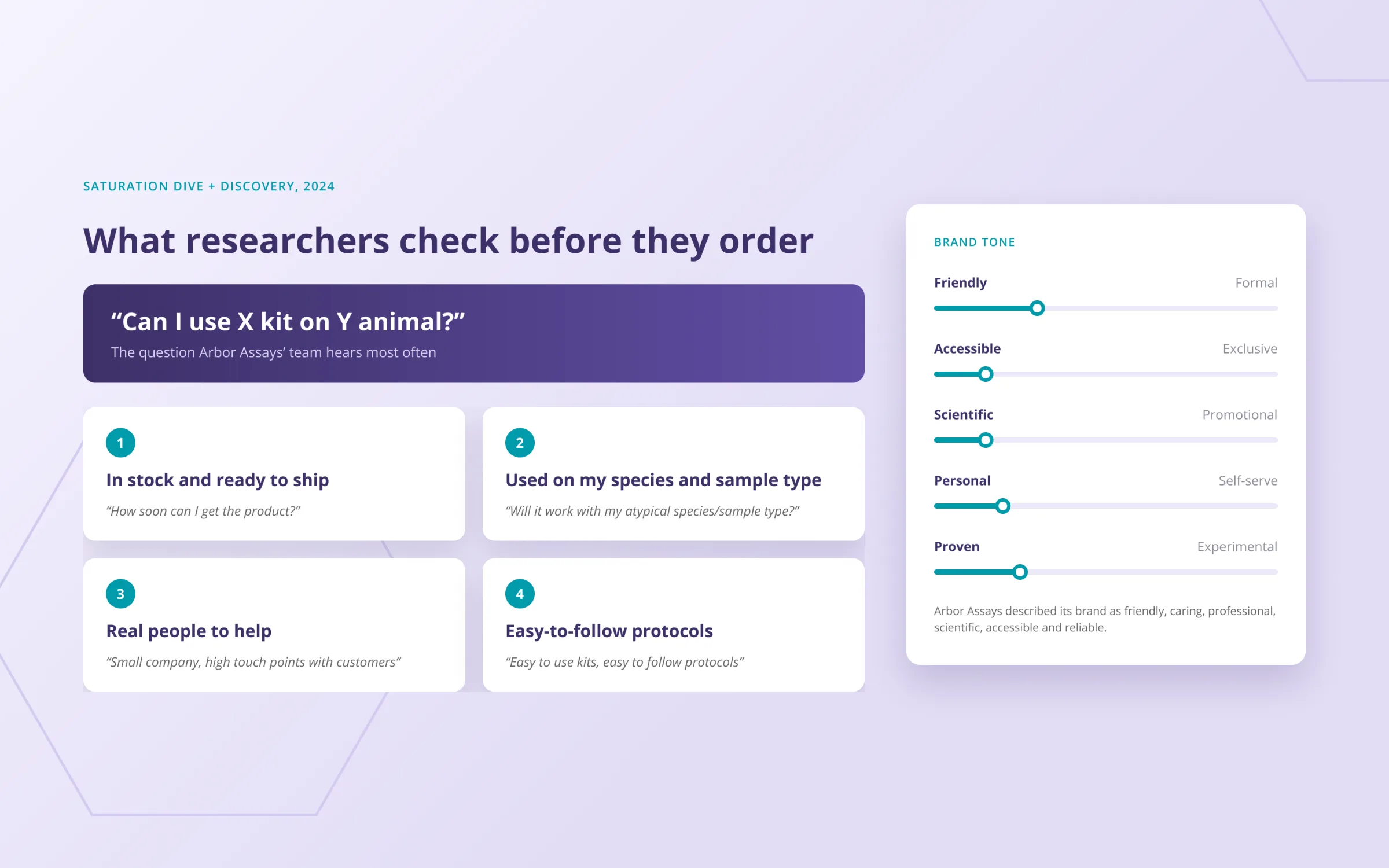
We went through the session notes and the feedback Arbor Assays had gathered from its own customers, and identified what researchers look for before they order. They want the kit in stock and ready to ship. They want to know the assay has been used on their species and sample type. They want real people they can call for help with a protocol, and protocols that are easy to follow.
Those four needs shaped the redesign. Search, publications and product pages had to answer them before anyone reached the cart.
Eight research areas instead of an alphabetical list
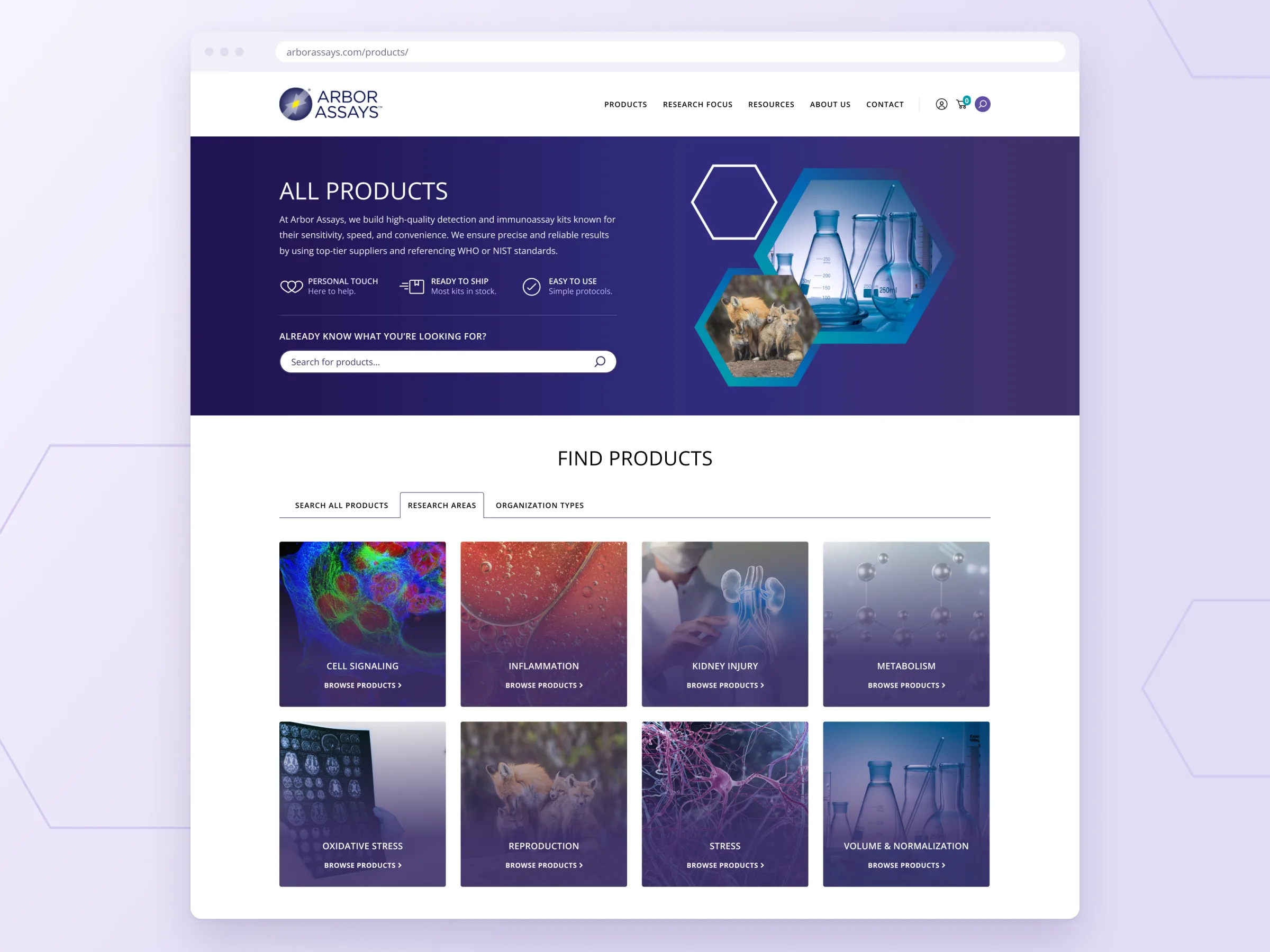
The old site sorted kits by name, which only helps if you already know the name. We cut the product types from five to two (assay kits, and antibodies and reagents) and built one menu with five items.
Products are now grouped into eight research areas: Cell Signaling, Inflammation, Kidney Injury, Metabolism, Oxidative Stress, Stress, Reproduction, and Volume & Normalization. A researcher can start from the question they’re studying and narrow down from there.
Pages for the wildlife biologist and the pharma buyer
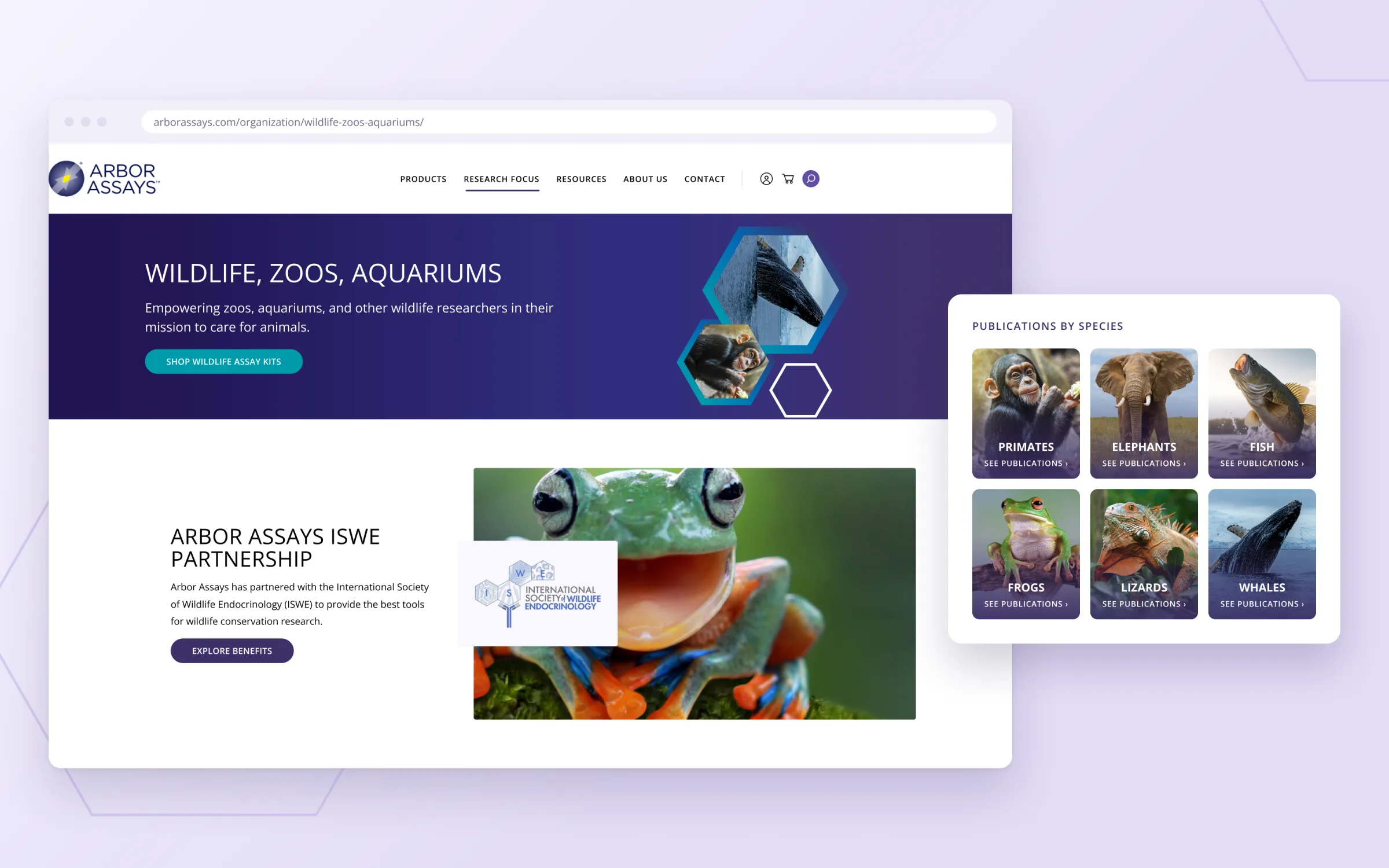
Arbor Assays sells to university labs, zoos and aquariums, biotech companies, contract research organizations and pharma. Its team told us these buyers need to be spoken to differently, so we built a page for each.
The wildlife page carries Arbor Assays’ partnership with the International Society for Wildlife Endocrinology and recent wildlife research that used Arbor Assays kits. The pages for contract research organizations and pharma followed after launch.
Product pages that lead with the research
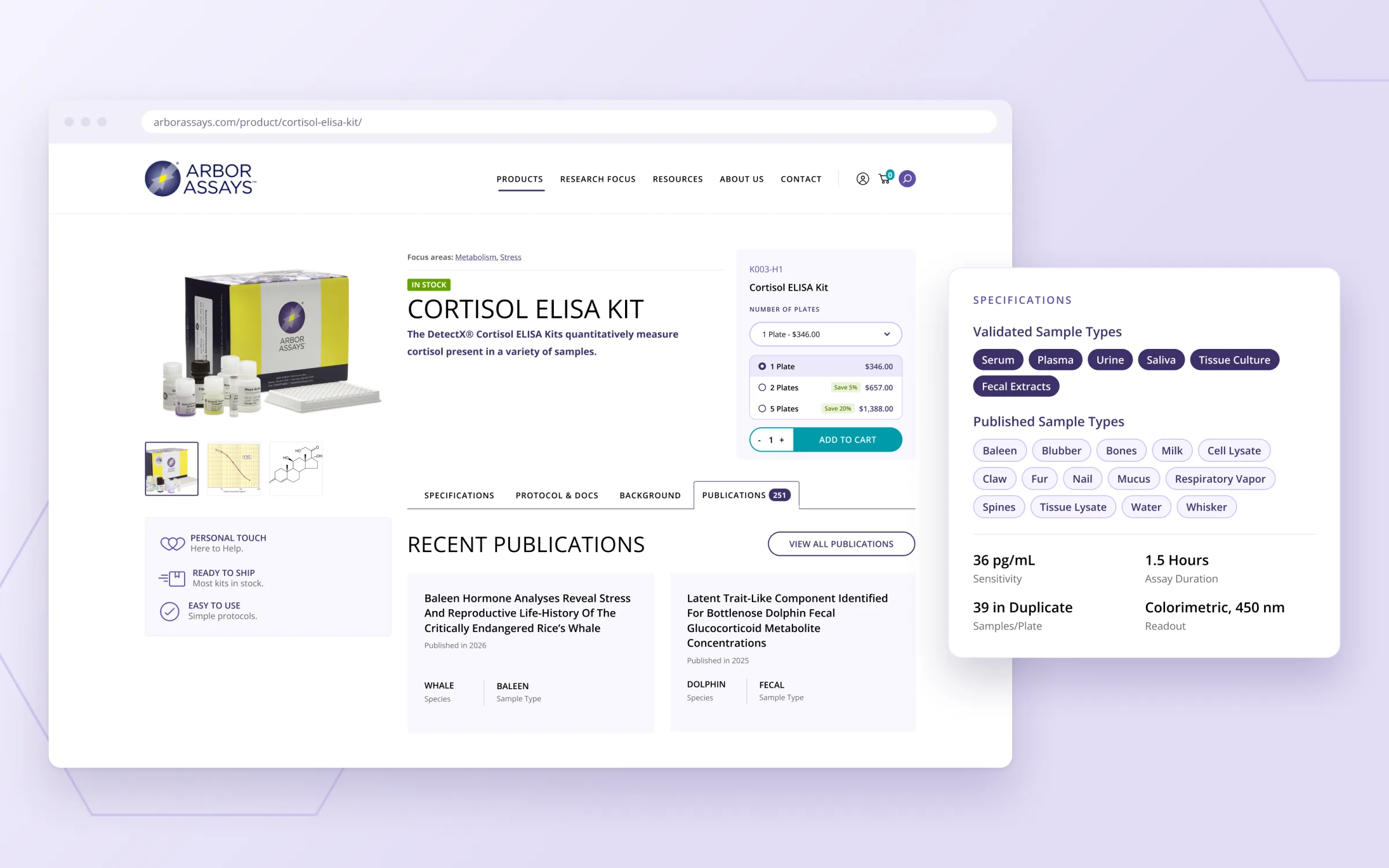
A scientist choosing a kit wants to know whether it has worked in a study like theirs. In discovery, Arbor Assays asked for publication filters by species and sample type, and we proposed tagging every paper with both. The Cortisol ELISA Kit page now lists 251 publications, each with the species and sample type used.
The page also separates validated sample types from the ones researchers have published with, such as baleen, blubber and whiskers. Three short promises on the page answer the other needs from discovery: a person who’s here to help, most kits in stock and ready to ship, and simple protocols. An In Stock label sits under the kit name, and the protocol and safety data sheet are one click away.
The single plate is listed first, with the 2-plate and 5-plate savings next to it. All of it builds on the PubMed citation tables we first added to Arbor Assays’ product pages in 2016.
Shipping logic built on the shipping team’s own box rules
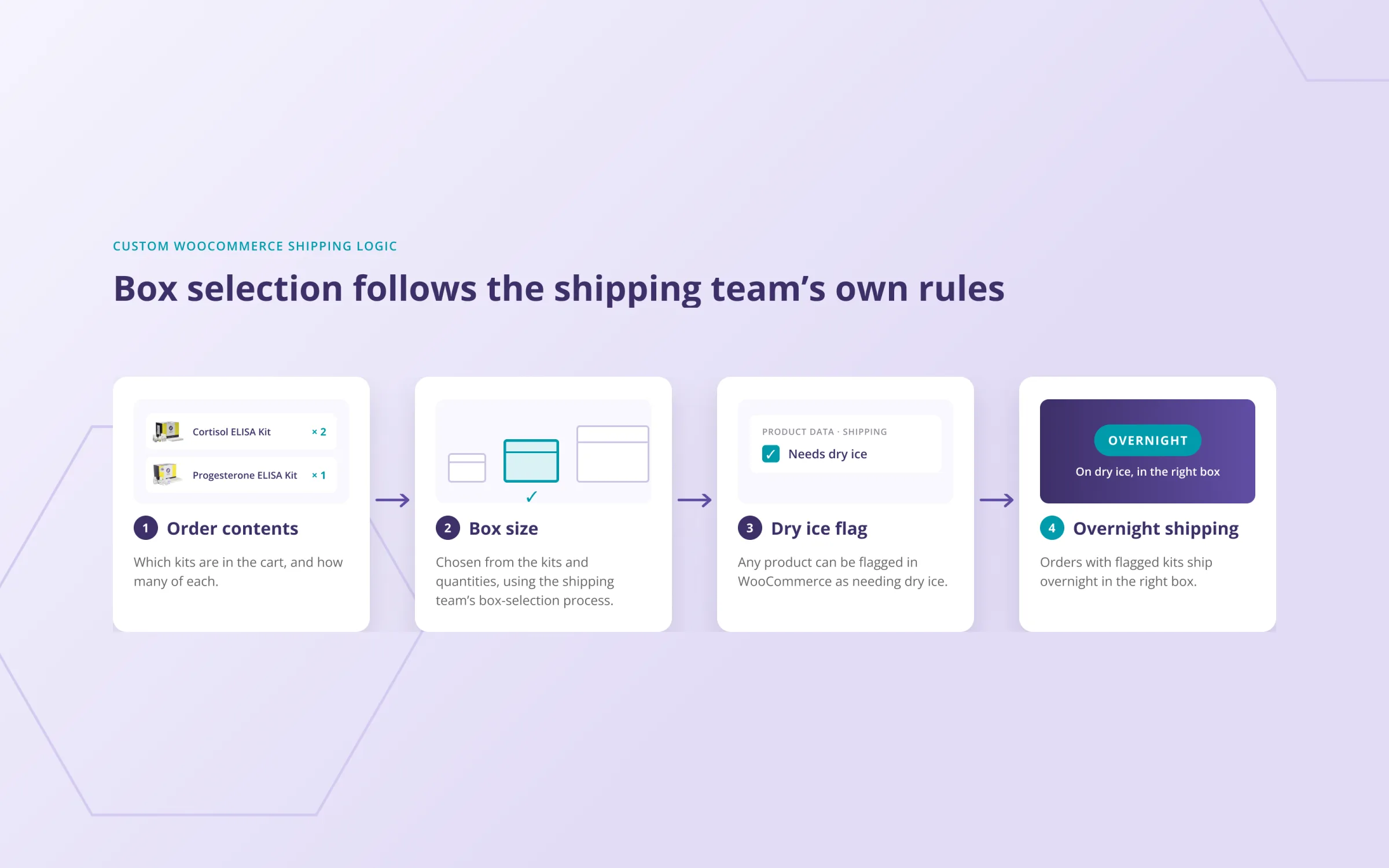
Most WooCommerce stores send item dimensions to FedEx or UPS and let the carrier pick a box. That doesn’t work for Arbor Assays. The box its shipping team uses depends on which kits are in the order and how many, and some kits have to travel on dry ice so they don’t spoil.
We wrote custom shipping logic that follows the team’s own box-selection process. We also added a way to flag any product in WooCommerce as needing dry ice, so orders with those kits ship overnight in the right box.
Moving 1,238 products without closing the store
Arbor Assays takes orders every week, so the store had to stay open through launch. We moved every product, 28 blog posts and 105 publication records to the new site. On launch day we pointed the domain to the new site, then ran a final sync to bring over orders placed on the old one during the switch.
Over 14 years we’ve built Arbor Assays’ site, moved it to WooCommerce and kept it running, so we knew which orders, products and records had to come across.
Project outcomes
From July 2025 through January 2026, while federal research funding cuts hit Arbor Assays’ customers, the store took 22% more orders than in the same months a year earlier.
+22%
More orders. July 2025 through January 2026, compared with the same months a year earlier.
+10%
Higher net sales. Online sales rose 10% over the same months.
36%
Checkout abandonment, down from 44%. In the 12 months after launch, compared with the 12 months before.